No, you should not chew gum in the first days after a tooth extraction. Newcastle Hospitals NHS Foundation Trust says no chewing for four hours. Bedfordshire Hospitals NHS Trust says to avoid hard or chewy food for 24 to 48 hours. No agency sets a firm gum date, so the dentist decides when gum is safe again. Cleveland Clinic says the jawbone needs several weeks.
Key Takeaways
- Newcastle Hospitals NHS Foundation Trust says no chewing for the first four hours after surgery.
- Bedfordshire Hospitals NHS Trust says to avoid hard or chewy food for 24 to 48 hours.
- Cleveland Clinic says a whitish look in the socket is normal and not a sign of infection.
- Bedfordshire says gum swelling peaks on day two or three and resolves in about 7 to 10 days.
- Pain with a bad taste or a high temperature needs a call to the dentist, according to the NHS.
Can I Chew Gum After Tooth Extraction?
No, you cannot chew gum right after a tooth extraction, because chewing is restricted while the blood clot and the wound settle. Newcastle Hospitals NHS Foundation Trust says no chewing for the first four hours. Bedfordshire Hospitals NHS Trust says to avoid hard or chewy food for 24 to 48 hours. The dentist confirms when gum is safe again.
Chewing gum is a sticky, repetitive jaw movement, and no named health agency publishes a set day for gum. Patients can ask about extraction services and get a gum date from the dentist who did the work. The reasons behind this advice follow below.
Why Is Chewing Gum After Tooth Extraction Discouraged?
Chewing gum after tooth extraction is discouraged because the blood clot must stay in the socket while the area heals. Cleveland Clinic says the clot prevents dry socket and protects the jawbone and nerves. The NHS describes dry socket as a clot that does not form properly or is dislodged before the gum has healed.
The NHS also advises against food that could get stuck in the wound, such as nuts or seeds. Gum is sticky, so the same caution applies. The next question covers when that caution ends.
When Can You Chew Gum After Tooth Extraction?
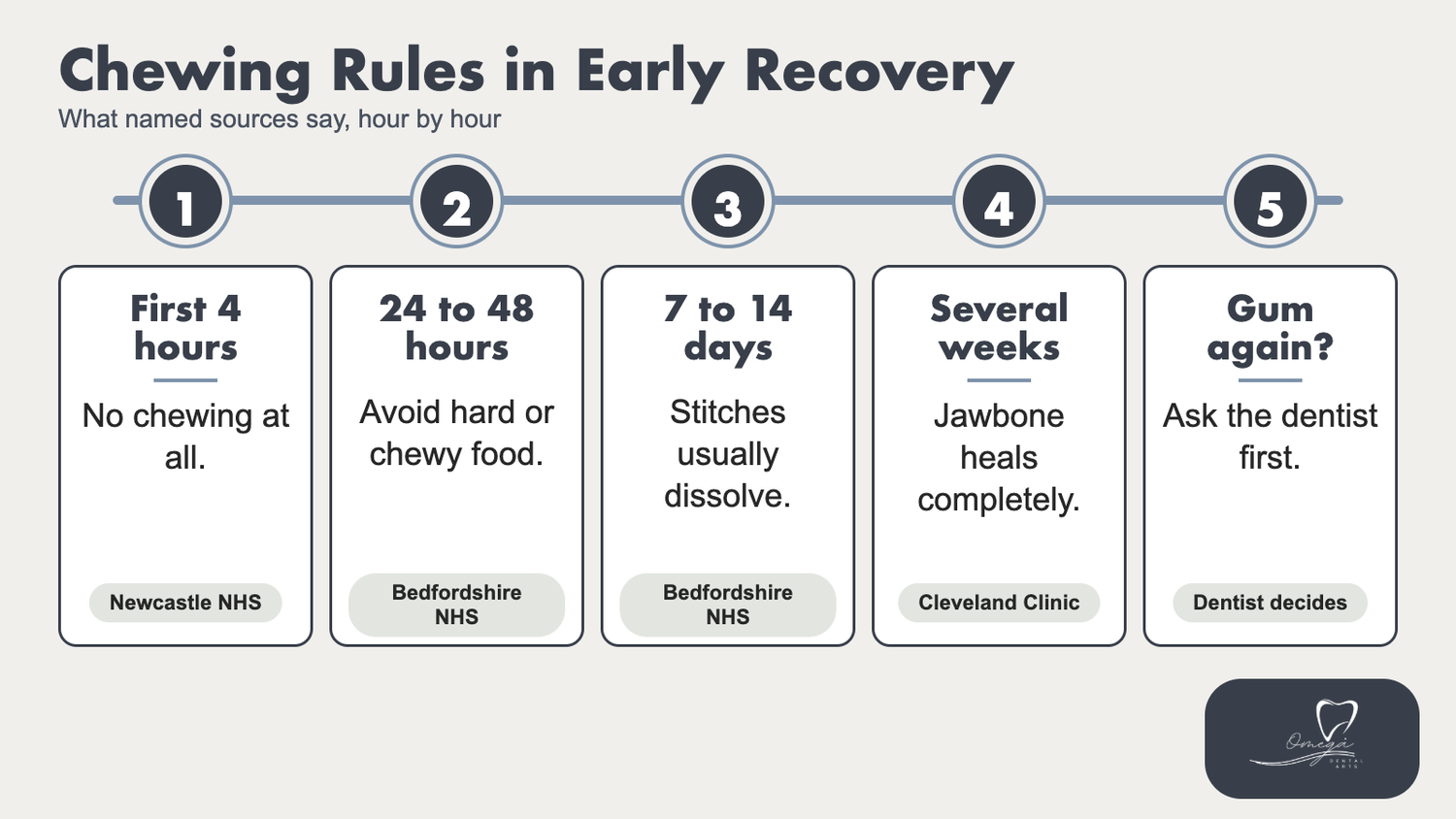
You can chew gum after tooth extraction only when the dentist confirms healing, because no agency names a fixed day. The named sources do set early limits on chewing. The table below lists each limit with the source behind it.
| Stage | Source | What the source says |
|---|---|---|
| First 4 hours | Newcastle Hospitals NHS Foundation Trust | No chewing |
| 24 to 48 hours | Bedfordshire Hospitals NHS Trust | Avoid hard or chewy food |
| 7 to 14 days | Bedfordshire Hospitals NHS Trust | Stitches usually dissolve |
| Several weeks | Cleveland Clinic | Jawbone heals completely |
The graphic below shows the same chewing limits as a five-step timeline, ending with the dentist's approval.
When Can I Chew Gum After Tooth Extraction With Stitches?
You can chew gum after tooth extraction with stitches only after the dentist approves. Stitches usually dissolve in 7 to 14 days. Bedfordshire Hospitals NHS Trust gives that range and adds that some stitches stay longer. Gum can cling to a closing wound, so wait for the dentist's go-ahead.
Can You Chew Gum After Tooth Extraction If It Is Sugar Free?
You can chew sugar-free gum after tooth extraction only after the dentist approves it, because sugar-free status says nothing about the wound. The American Dental Association says only sugar-free gum can earn its Seal of Acceptance. Trials found fewer cavities when people chewed sugar-free gum for 20 minutes after meals. The ADA page does not address extraction sites.
Can Chewing Gum Help a Stiff Jaw After Extraction?
Chewing gum is not a named treatment for a stiff jaw after extraction, and gentle stretching is the advice given instead. Newcastle Hospitals NHS Foundation Trust says mouth opening may be restricted for up to seven days. The Trust recommends rest and gentle daily stretching, and it warns against forcing the jaw open.
Can I Use Nicotine Gum After Tooth Extraction?
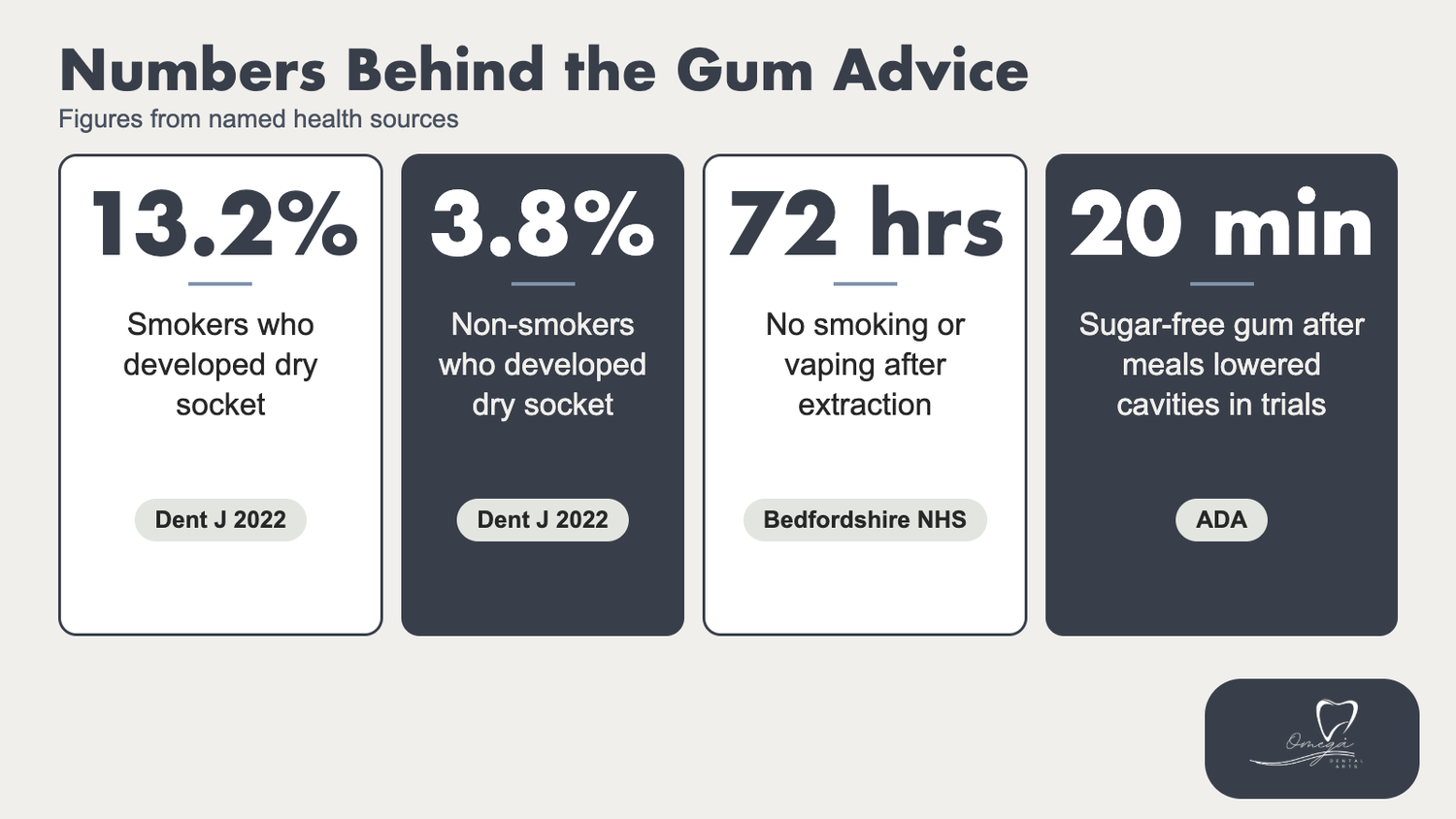
Nicotine gum is not covered by the agency sources reviewed, so ask the dentist before using it after tooth extraction. Bedfordshire Hospitals NHS Trust says no smoking or vaping for at least 72 hours to prevent delayed healing and dry socket. A Dent J 2022 review found dry socket in about 13.2% of smokers and 3.8% of non-smokers.
The graphic below sets those figures beside the 72-hour rule and the ADA gum finding.
How Does Gum Healing After Tooth Extraction Progress?
Gum healing after tooth extraction progresses from a blood clot to new tissue that fills the socket from the bottom up. Cleveland Clinic lists five stages: bleeding, clot formation, clot integration, new tissue filling the socket, and fully healed gums. Newcastle Hospitals NHS Foundation Trust notes that the gum is stitched back in place during early healing.
What Is a Normal Hole in Gum After Tooth Extraction?
A normal hole in gum after tooth extraction is the empty tooth socket, and Cleveland Clinic says it looks strange at first. A small indentation may remain while new tissue fills the socket. The NHS says a blood clot forms over the wound to help it heal.
Readers who want a visual comparison can read what a normal socket looks like at each stage. Color changes in the socket come next.
Why Is My Gum White After Tooth Extraction?
Your gum is white after tooth extraction because the clot is integrating with nearby tissue, which Cleveland Clinic calls normal. White gum after tooth extraction is not a sign of infection on its own, according to the same page. Severe pain, a bad taste or a high temperature changes the picture.
A dry socket looks different. A Dent J 2022 review lists exposed bone, debris and bad breath alongside severe pain. The NHS tells patients with pain and a bad taste to call their dentist.
How Long Does Gum Healing After Tooth Extraction Take?
Gum healing after tooth extraction takes about a week for early symptoms to settle and several weeks for the jawbone. Cleveland Clinic says side effects should go away within a week. A molar socket can take up to four months for the jaw to heal fully.
Healing gum after tooth extraction should look healthy once new tissue forms, according to Cleveland Clinic. Patients can book restorative treatment follow-up when a site looks different from these descriptions. Swelling is the next point to cover.
What Is Normal Discomfort After Tooth Extraction?
Normal discomfort after tooth extraction includes gum swelling, bruising and soreness that ease within about a week. Cleveland Clinic says it is normal to notice swollen gums around the extraction area. Bedfordshire Hospitals NHS Trust adds that bruising can last longer than swelling and is harmless.
How Long Does Gum Swelling After Tooth Extraction Last?
Gum swelling after tooth extraction lasts about 7 to 10 days, and it may increase on the second or third day. Bedfordshire Hospitals NHS Trust gives those numbers. Ice packs over the area during the first 24 to 48 hours reduce swelling and bruising, according to the same Trust.
How Long Does Gum Pain After Tooth Extraction Last?
Gum pain after tooth extraction should start to improve after one or two days, according to the NHS. Cleveland Clinic names day three as usually the worst day of pain. Pain that grows instead of easing after those days needs a call to the dentist.
Newcastle Hospitals NHS Foundation Trust says jaw stiffness can last up to seven days. The jaw soreness recovery article explains relief steps. The next question covers pain relief itself.
What Helps Gum Pain After Tooth Extraction?
Paracetamol or ibuprofen helps gum pain after tooth extraction, according to the NHS. Ice packs and rest also help during the first days. The six steps below come from the NHS hospital leaflets.
How Do You Care for the Gum After Tooth Extraction Step by Step?
To care for the gum after tooth extraction, follow these six steps from the named hospital leaflets.
- Skip vigorous rinsing for the first 24 hours, according to Bedfordshire Hospitals NHS Trust.
- Apply ice packs over the area during the first 24 to 48 hours.
- Rest with the head raised on multiple pillows to reduce swelling.
- Rinse gently with warm salty water after meals from the next day, as Bedfordshire describes.
- Brush gently around the stitches three to four days after surgery without dislodging the clot, per Newcastle Hospitals NHS Foundation Trust.
- Skip smoking and vaping for at least 72 hours.
Patients with questions about smoking rules can read the timing details separately. Infection signs are the next topic.
What Are the Signs of an Infected Gum After Tooth Extraction?
An infected gum after tooth extraction shows redness, increased pain, swelling, discharge, fever and feeling unwell, according to Bedfordshire Hospitals NHS Trust. The Trust says the infection risk after surgery is low. The risk rises with poor oral hygiene, diabetes, immunosuppression, smoking, vaping, certain medications and poor wound care.
The common signs of infection listed by Bedfordshire Hospitals NHS Trust are:
- Redness of the gums
- Increased pain
- Swelling
- Discharge
- Fever
- Feeling generally unwell
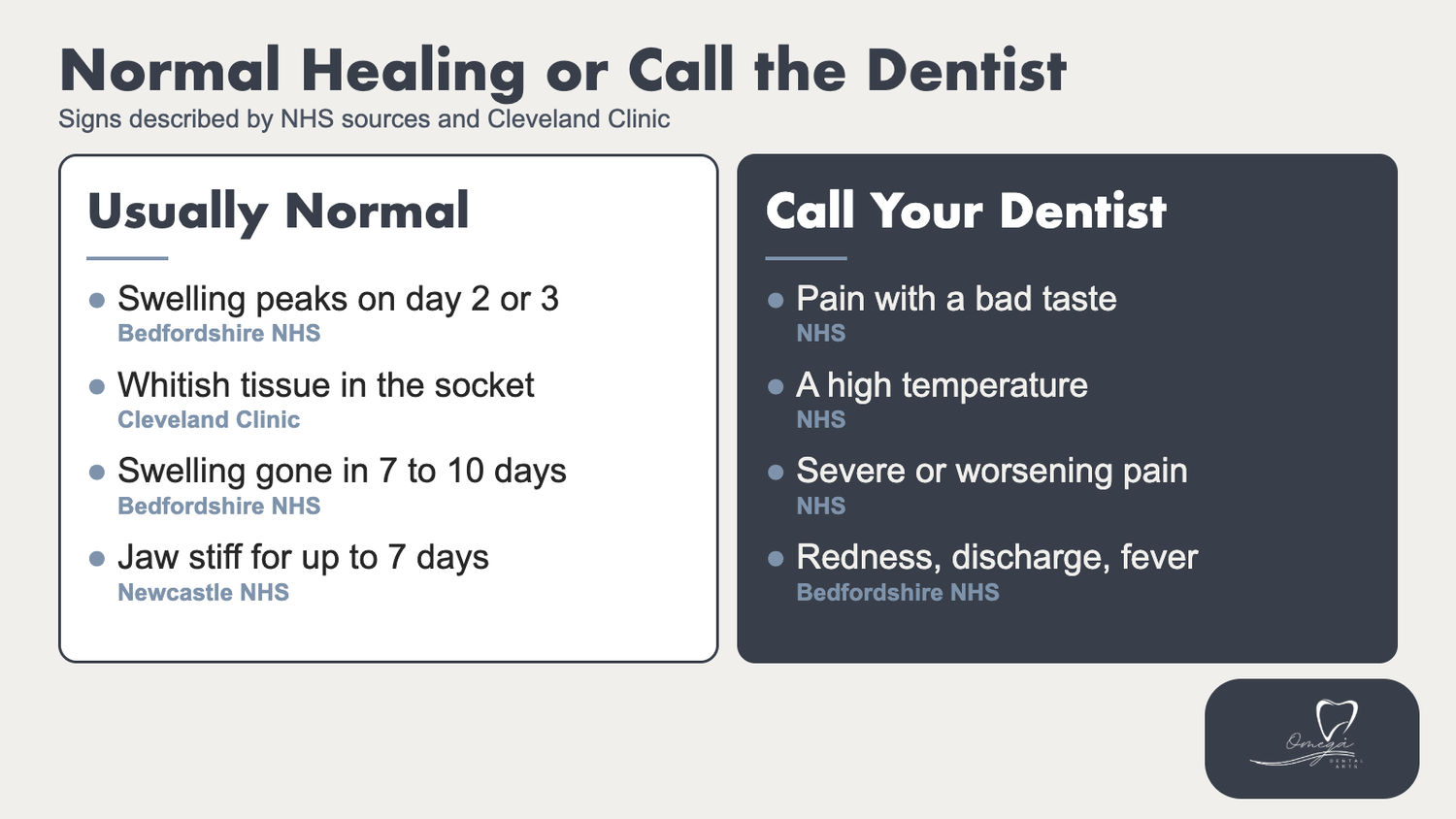
Readers can compare these signs with a dental infection in general. The graphic below separates usual healing from signs that need a call.
How Is Dry Socket Different From Normal Soreness?
Dry socket is different from normal soreness because the clot is lost and the pain is severe. A Dent J 2022 review says dry socket pain usually starts one to five days after surgery. Bedfordshire Hospitals NHS Trust says symptoms usually start in the first 24 to 48 hours.
Smokers and vapers face higher risk, as do patients with prolonged or complex extractions, according to Bedfordshire. The dry socket article lists the warning signs in detail. The next question covers when to call.
When Should You Call the Dentist After an Extraction?
You should call the dentist after an extraction when pain and swelling are severe or getting worse and painkillers are not helping. The NHS also lists pain with a bad taste, a high temperature and feeling unwell. Patients needing same-day help can reach urgent dental care through our office.
What Else Should You Know About Eating and Chewing After Extraction?
What Can You Eat Instead of Gum After Tooth Extraction?
Soft foods that need little chewing replace gum after tooth extraction. Bedfordshire Hospitals NHS Trust says to avoid hard or chewy food for 24 to 48 hours. The NHS also says to skip hard or crunchy food and anything that could get stuck in the wound.
A list of soft foods shows safe choices for each stage.
The straw question comes next.
Can You Use a Straw After Tooth Extraction?
You should not use a straw after tooth extraction. Cleveland Clinic says drinking through a straw can disrupt the blood clot and cause dry socket. The same page lists straws among the habits to avoid during recovery. A cup is the simple alternative for the first days.
Does the Same Gum Advice Apply After Wisdom Tooth Removal?
The same chewing cautions apply after wisdom tooth removal, according to the NHS. The NHS says to avoid hard or crunchy food and food that can get stuck in the wound. The NHS also says to keep the area clean by rinsing gently and cleaning other teeth carefully. Patients planning eating again can follow that timeline for normal meals.
Frequently Asked Questions
Can You Chew Gum 24 Hours After a Tooth Extraction?
Chewing gum 24 hours after a tooth extraction falls inside a window. Bedfordshire Hospitals NHS Trust says to avoid hard or chewy food for 24 to 48 hours. Wait for the dentist's approval instead.
Does Chewing Gum Cause Dry Socket?
Chewing gum has not been linked to dry socket in the agency sources reviewed. Dry socket is the loss of the blood clot, and the sources name smoking, vaping and complex extractions as higher-risk factors.
When Can You Brush Near the Extraction Site?
You can brush gently around the stitches three to four days after surgery, according to Newcastle Hospitals NHS Foundation Trust. Cleveland Clinic says to avoid brushing directly over the site until the dentist says it is safe.
How Long Should You Avoid Smoking After an Extraction?
Avoid smoking and vaping for at least 72 hours after an extraction, according to Bedfordshire Hospitals NHS Trust. The Trust links smoking to delayed healing and painful dry socket.
How Does Omega Dental Arts Help With Tooth Extraction Recovery?
Omega Dental Arts helps with tooth extraction recovery by checking the site and telling patients when gum is fine again. Our team in Cherry Hill answers questions about chewing and healing. Patients who need tooth removal can discuss aftercare before the visit.
The answer to can i chew gum after tooth extraction depends on the healing site, so we check it first. Questions about gum or any other food can go to Omega Dental Care by phone at (856) 662-1155.