No, a tooth extraction should not hurt while it happens when the area is fully numb. StatPearls says a patient should feel pressure but no sharp pain. Soreness starts as the anesthetic fades, which Bedfordshire Hospitals NHS Trust puts at 90 minutes to 4 hours. Cleveland Clinic says day three is usually the worst day of pain. A 2019 study found pain peaked two hours after extraction.
Key Takeaways
- Local anesthetic blocks pain, so the dentist should hear about any sharp pain right away.
- Pressure and pushing during the procedure are expected, according to StatPearls.
- A 2019 study found pain peaked 2 hours after extraction and then dropped quickly.
- Cleveland Clinic names day three as usually the worst day of discomfort.
- Pain that grows after day three can signal dry socket, so call the dentist.
Does Tooth Extraction Hurt During the Procedure?
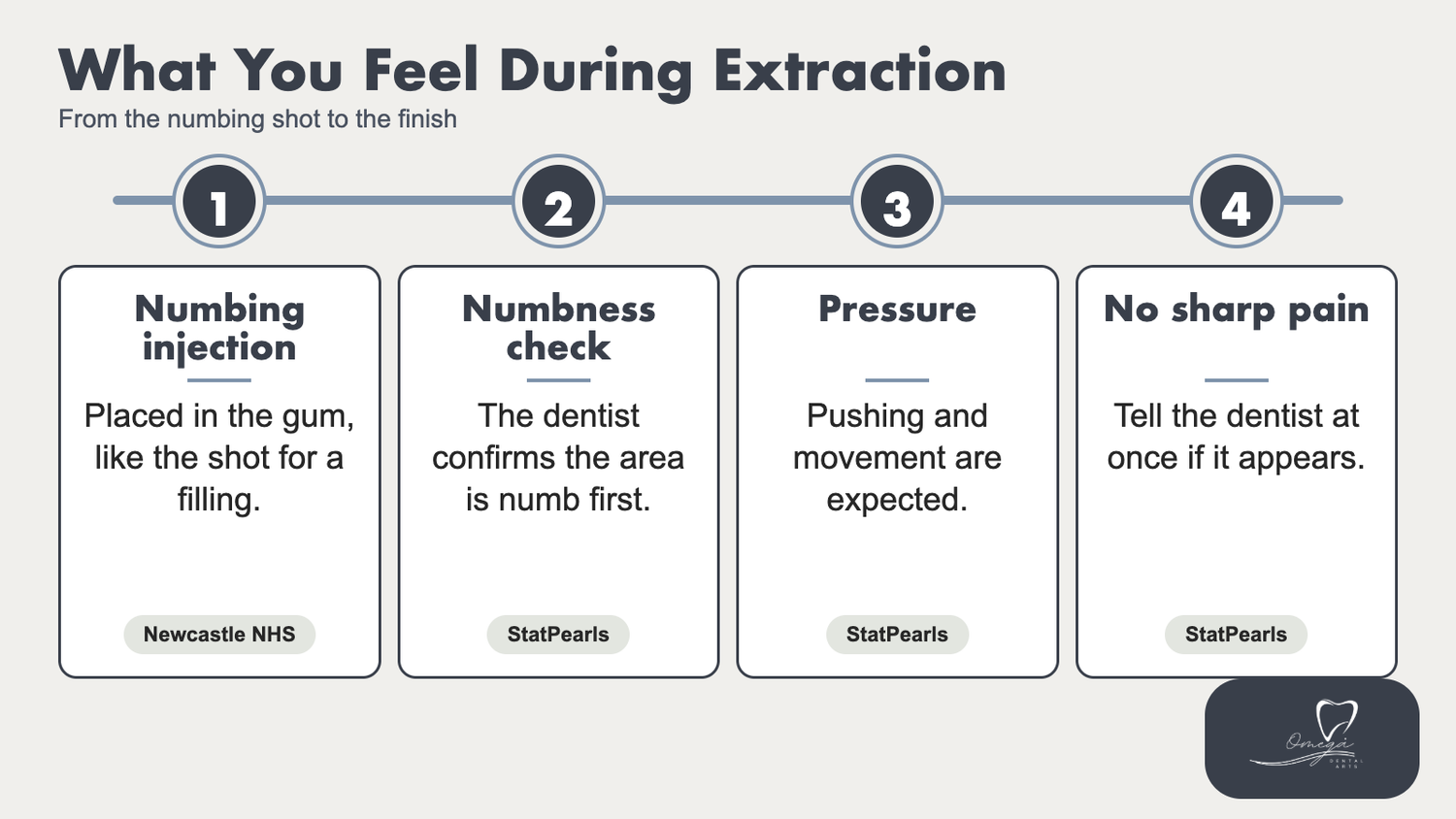
Tooth extraction does not hurt during the procedure when the area is fully numb. Local anesthetic stops pain signals from the tooth and gum, according to StatPearls. The patient still feels pressure and movement but no sharp pain. The patient should tell the dentist right away if sharp pain appears.
Patients who need a tooth removed can book an exam for extraction care and talk through numbing options first. The dentist checks that the area is numb before starting, which leads to the numbing steps below.
How Does a Dentist Numb a Tooth Before Extraction?
A dentist numbs a tooth before extraction by placing a local anesthetic injection in the gum around the tooth. Newcastle Hospitals NHS Foundation Trust compares the injection to the one used for a filling. The dentist then waits until the lip, gum and tooth feel numb.
The numbing drug works on the nerve itself. According to StatPearls, local anesthetics block voltage-gated sodium channels, which stops nerve impulses from traveling to the brain.
Why Do You Feel Pressure but Not Pain During an Extraction?
You feel pressure but not pain during an extraction because numbing stops pain signals only. The dentist still rocks and lifts the tooth. StatPearls says the patient should be warned that a pressure sensation is expected. Sharp pain should not be present.
Pressure comes from the tooth moving in its socket as the dentist loosens it. Any sharp pain is a signal to speak up. The graphic below shows what each step feels like.
Does Tooth Extraction With Sedation Still Hurt?
Tooth extraction with sedation does not hurt more than extraction with numbing alone, because the dentist still gives local anesthetic. Newcastle Hospitals NHS Foundation Trust says local anesthetic is given after sedation and before treatment starts. Sedation adds relaxation, not extra numbing.
Intravenous sedation changes the day after treatment. The same trust says patients cannot drive, work or sign important documents for 24 hours. A responsible adult must take the patient home.
How Bad Does a Tooth Extraction Hurt Afterward?
How bad a tooth extraction hurts afterward is measurable. A 2019 study of uncomplicated extractions found average pain peaked at 27.3 on a 0 to 100 scale two hours later. The researchers followed 31 patients aged 10 to 15 for seven days. Pain fell quickly after the fourth hour.
The same study counted 16 of 57 extractions (28%) with moderate pain, scored at 40 or higher. Those figures come from premolar extractions in young patients, published in the European Archives of Paediatric Dentistry. Adult molar extractions can feel different, which the next section covers.
Does Tooth Extraction Hurt After the Numbness Wears Off?
Yes, does tooth extraction hurt after the numbness wears off is answered by soreness. Bedfordshire Hospitals NHS Trust says pain is expected once local anesthetic wears off. The numbness lasts 90 minutes to 4 hours.
Newcastle Hospitals NHS Foundation Trust advises taking painkillers before the local anesthetic wears off. That trust says pain for a few days after treatment is normal. A dentist can advise which pain reliever suits each patient.
How Long Does Pain Last After a Tooth Extraction?
Pain lasts up to seven days after a surgical tooth removal, according to Newcastle Hospitals NHS Foundation Trust. A BMC Oral Health study of wisdom tooth extractions recorded pain at 1, 3, 7 and 30 days. The study found that pain generally decreased over time.
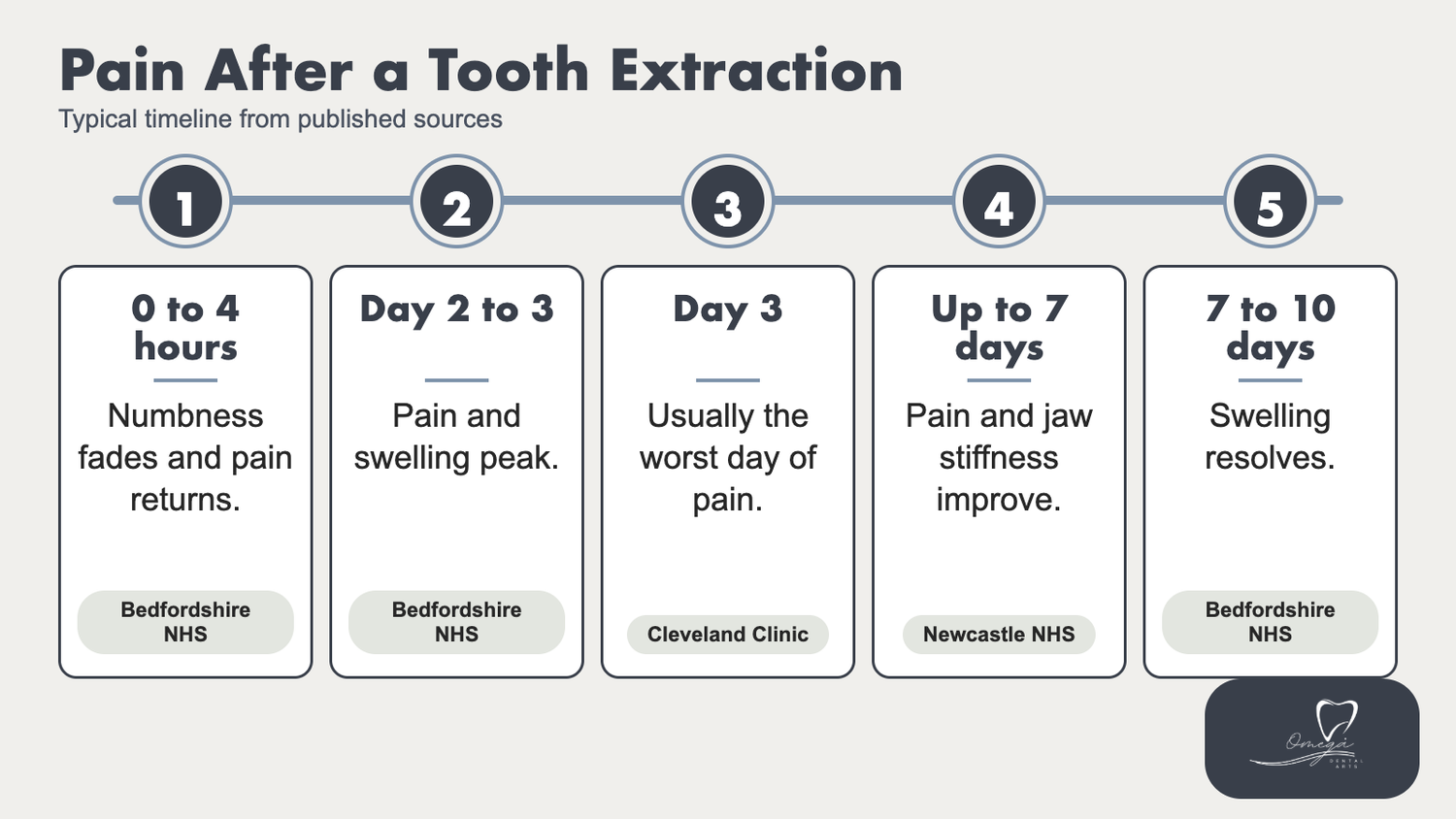
Cleveland Clinic says the jawbone takes several weeks to heal fully. Routine activities can resume within 48 to 72 hours. The table below puts the main timeline from those sources in one place.
| When | What is expected | Source |
|---|---|---|
| 0 to 4 hours | Numbness fades; pain returns | Bedfordshire NHS Trust |
| Day 2 to 3 | Pain and swelling peak | Bedfordshire NHS Trust |
| Day 3 | Usually the worst day of pain | Cleveland Clinic |
| Up to 7 days | Pain and jaw stiffness improve | Newcastle NHS Trust |
| 7 to 10 days | Swelling resolves | Bedfordshire NHS Trust |
The timeline shows pain easing after the third day. A rise in pain after that point needs a different explanation, covered under the warning signs below.
What Is the Worst Day After a Tooth Extraction?
The worst day after a tooth extraction is usually day three, according to Cleveland Clinic. Bedfordshire Hospitals NHS Trust agrees that pain tends to worsen on the second or third day and then improves. Swelling follows the same pattern.
Cleveland Clinic advises taking it easy for the first three days. Rest, soft foods and ice packs help during that stretch. Our guide to soft food list choices covers what to eat.
Is a Tooth Extraction Painful After Surgical Removal?
Tooth extraction is painful afterward more often with surgical removal, which involves a gum incision and sometimes bone removal. Recovery can feel stronger than after a simple pull. Newcastle Hospitals NHS Foundation Trust says the pain experienced depends on the difficulty of the surgery and each individual.
A simple extraction removes a tooth that has already come through the gum. A surgical extraction removes a tooth that is broken, impacted or below the gum line. The table compares the two.
| Feature | Simple extraction | Surgical extraction |
|---|---|---|
| Gum incision | Not needed | Needed |
| Numbing | Local anesthetic | Local anesthetic, sometimes with sedation |
| Recovery pain | Depends on the tooth and the patient | Depends on how difficult the surgery is |
Both types use numbing, so neither should hurt during the procedure. The wisdom tooth timing in our post on wisdom tooth timing shows how long a surgical case takes.
Why Does Your Jaw Hurt After Tooth Extraction?
Your jaw hurts after tooth extraction as part of normal recovery in many cases. Newcastle Hospitals NHS Foundation Trust says jaw pain or stiffness is common after surgery, especially a prolonged or difficult case.
The same trust says mouth opening may be restricted for up to seven days. Rest and gentle daily stretching help it improve. The trust warns against forcing the jaw open.
The page on jaw pain recovery explains what speeds healing.
Why Does the Tooth Next to My Extraction Hurt?
The tooth next to an extraction can hurt because of damage during the procedure or a problem the tooth already had. StatPearls lists damage to neighboring teeth among extraction risks, especially when adjacent teeth have restorations.
A dentist checks several causes when a tooth next to extraction hurts after a few days. The list below names them.
- Damage to the neighboring tooth during the procedure.
- A filling or crown on the neighboring tooth, which raises that risk.
- A cavity or crack that was already present.
- Dry socket near the extraction site.
- Sinus involvement after removal of an upper back tooth.
StatPearls notes that the roots of upper back teeth can lie next to the maxillary sinus. A dentist can test the neighboring tooth and find the source of the pain.
What Helps Pain After Tooth Extraction?
Non-opioid pain relievers help pain after tooth extraction. The American Dental Association (ADA) recommends NSAIDs, with or without acetaminophen, as first-line care for acute dental pain. The guideline covers patients aged 12 and up. The ADA guideline names ibuprofen and naproxen as examples.
The steps below combine ADA advice with aftercare from Bedfordshire Hospitals NHS Trust and Cleveland Clinic.
- Take the pain reliever your dentist recommends before the numbness fades.
- Apply an ice pack to the cheek during the first 24 to 48 hours.
- Keep your head raised on several pillows to reduce swelling.
- Skip straws, which can disturb the blood clot, according to Cleveland Clinic.
- Avoid smoking or vaping for at least 72 hours, as the trust advises.
- Rest for the first three days and avoid heavy lifting.
Patients who smoke should read about smoking after extraction before the visit. Pain that does not respond to these steps needs a call to the dentist.
When Is Pain After Tooth Extraction a Warning Sign?
Pain after tooth extraction is a warning sign when it grows worse after day three instead of easing. Cochrane describes dry socket as severe pain developing 2 to 3 days after the procedure. The 2022 systematic review in the Dentistry Journal puts the start at one to five days.
Dry socket means the blood clot in the socket is lost. According to that review, 13.2% of smokers developed dry socket, compared with 3.8% of non-smokers. A Kathmandu study counted 103 dry sockets in 2,640 extractions, or 3.9%.
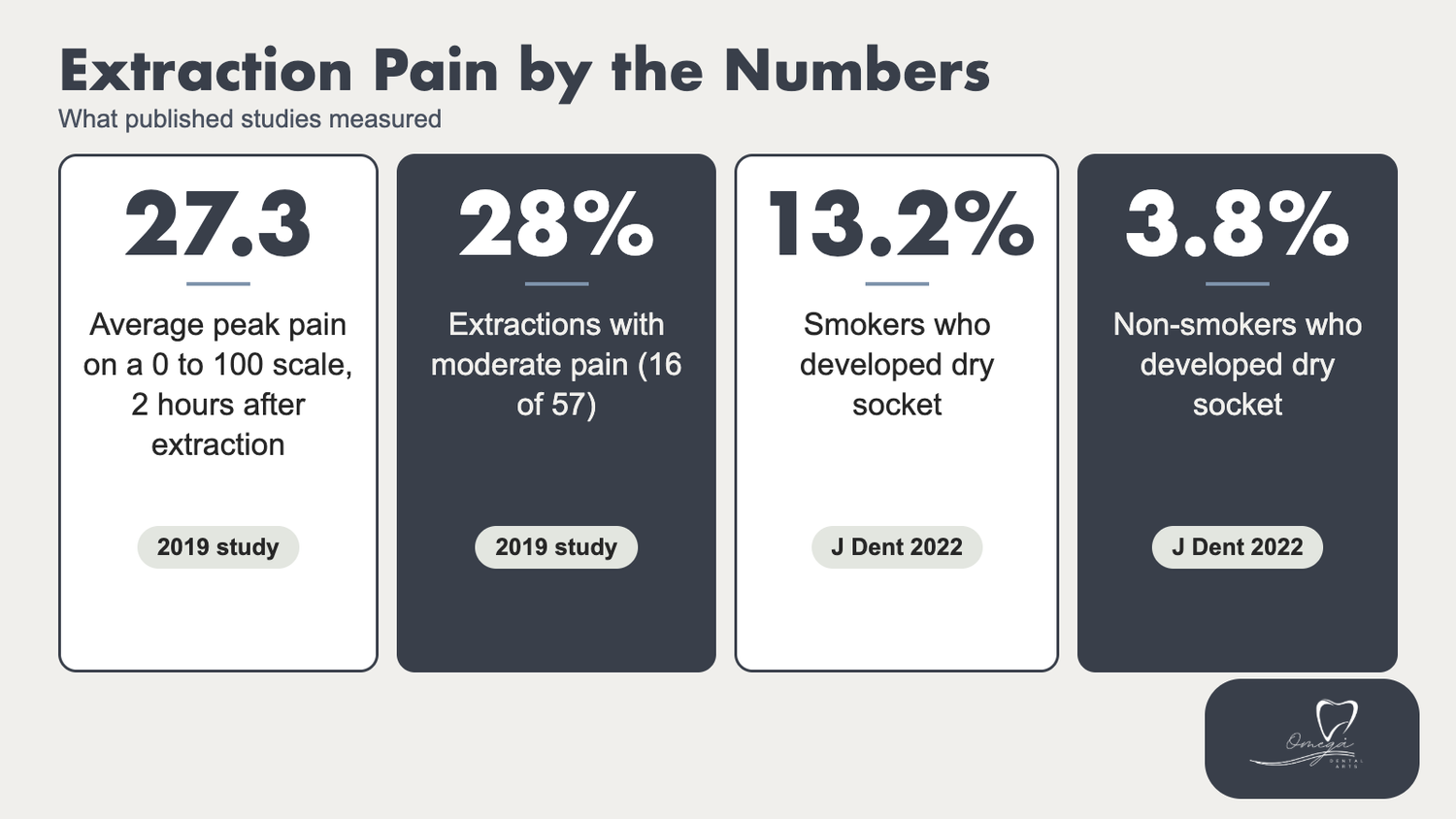
The statistic cards above summarize the pain and dry socket figures from the studies. The table below separates normal healing from warning signs.
| Sign | Normal healing | Call the dentist |
|---|---|---|
| Pain trend | Peaks day 2 to 3, then eases | Gets worse after day 3 |
| Swelling | Resolves in 7 to 10 days | Spreads or grows |
| Other signs | Blood-stained saliva early on | Fever, bad taste, discharge |
| Response to medicine | Pain relievers help | Pain relievers do not help |
Bedfordshire Hospitals NHS Trust lists redness, increased pain, swelling, discharge, fever and feeling unwell as infection signs. Our overview of dry socket signs shows what the pain feels like.
What Else Should You Know About Tooth Extraction Pain?
Does Smoking Make Tooth Extraction Pain Worse?
Smoking raises the risk of dry socket, the main cause of strong pain after extraction. A Dentistry Journal review found dry socket in about 13.2% of smokers against 3.8% of non-smokers. The authors note the studies differed in tooth type and patient age.
Can You Sleep Comfortably After a Tooth Extraction?
You can sleep after a tooth extraction by keeping your head raised on several pillows. Bedfordshire Hospitals NHS Trust says elevating the head reduces swelling. Swelling increases on the second or third day, so the pillows matter most then.
How Common Is Fear of Tooth Extraction Pain?
Dental fear and anxiety affect 15.3% of adults, according to a 2021 Journal of Dentistry meta-analysis of 72,577 adults. High fear affected 12.4% and severe fear 3.3%. Patients with fear can ask a dentist about sedation options before the visit.
Can You Drive or Work After a Tooth Extraction?
You can drive and work after a tooth extraction under local anesthetic alone, according to Newcastle Hospitals NHS Foundation Trust. Strenuous activity is the exception, and the trust advises against it. Cleveland Clinic says most patients return to work or school within a day or two.
Is Swelling Normal After a Tooth Extraction?
Swelling is normal after a tooth extraction. Bedfordshire Hospitals NHS Trust says swelling may increase on day two or three and resolves in about 7 to 10 days. Bruising can last longer than swelling and is harmless, according to that trust.
Frequently Asked Questions
How Painful Is a Tooth Extraction on a Scale of 1 to 10?
No single score describes how painful a tooth extraction is. A 2019 study of uncomplicated extractions recorded a peak average of 27.3 on a 0 to 100 scale, two hours afterward. Surgical cases and wisdom teeth may score higher.
Is Tooth Extraction Painful for Children?
Tooth extraction is painful for children only briefly in the 2019 study. That study of 10 to 15 year olds found that pain peaked two hours after extraction and fell quickly. Moderate pain appeared in 28% of the 57 extractions.
Can a Tooth Extraction Relieve Pain?
A tooth extraction can relieve pain almost immediately when the tooth is severely broken or infected, according to Cleveland Clinic. The toothache before the visit can be stronger than the procedure itself. The dentist decides whether extraction is the right treatment.
Should You Take Pain Medicine Before the Numbness Wears Off?
Yes, take pain medicine before the numbness wears off. Newcastle Hospitals NHS Foundation Trust says local anesthetic lasts up to three hours, and painkillers should start before it ends. Follow the dentist's dosing instructions and the package label.
Do You Need Opioids After a Tooth Extraction?
Opioids are not the first choice after a tooth extraction. The ADA guideline recommends NSAIDs, with or without acetaminophen, as first-line treatment for acute dental pain in patients 12 and older. The dentist decides if a patient needs anything stronger.
How Does Omega Dental Arts Help With Tooth Extraction Pain?
Omega Dental Arts helps with tooth extraction pain by numbing the area first and explaining each step. Our team in Cherry Hill checks comfort throughout the visit and explains each aftercare step. Patients with a lingering toothache can reach out through our urgent toothache care page. The dentist advises on the next step after an exam.
We also help patients plan for the space left by a missing tooth. The dentists review replacement choices such as bridges, dentures and implant options. They explain how healing time affects each one before any plan starts.
The doctors treat extraction care as part of restorative dentistry, alongside fillings and root canals. Each patient receives an exam and a clear explanation of the numbing plan. The dentist answers questions about pressure, sedation and recovery before treatment begins.
Patients who want to ask about numbing, sedation or recovery can schedule a visit with our front desk team. The staff will confirm a time that suits the patient and explain what to bring to the first appointment.
New and returning patients are always welcome at Omega Dentistry. Our team treats comfort as a priority from the first call to the last follow-up.