How to care for dentures comes down to rinsing after meals, brushing daily with mild soap, and soaking in water overnight. Cleveland Clinic says dentures should be out at least 8 hours every day. The American Dental Association (ADA) says hot or boiling water can warp them. Cleveland Clinic gives an average lifespan of 7 to 10 years with proper care.
Key Takeaways
- The ADA says dentures kept in water or cleanser stay moist and hold their shape, while hot water can warp them.
- The NHS says to brush dentures with soft soap or washing-up liquid, not toothpaste.
- Cleveland Clinic says dentures should be out for at least 8 hours every day.
- The ADA lists more than 5 years since the denture was made as a replacement red flag.
- The FDA says a 2.4-ounce tube of adhesive should last 7 to 8 weeks for upper and lower dentures.
- The NHS says to see a dentist when dentures click, slip, hurt or crack.
How Do You Care for Dentures Every Day?
You care for dentures every day by rinsing, cleaning, brushing and soaking them in a fixed order. The ADA, Cleveland Clinic and the NHS describe the same daily routine. Knowing how to care for dentures starts with these six steps.
- Rinse the dentures under cold water after meals to wash off loose food, as the NHS advises.
- Hold the dentures over a sink filled with water or a folded towel, because the NHS says they can break if dropped.
- Remove any adhesive, then rinse away loose debris, as the ADA lists for the first cleaning step.
- Brush every surface gently with a soft brush and mild soap or a nonabrasive cleanser.
- Brush the gums, tongue and roof of the mouth with a soft brush, as the ADA recommends each morning.
- Store the dentures in water or a denture cleanser solution overnight, according to the ADA.
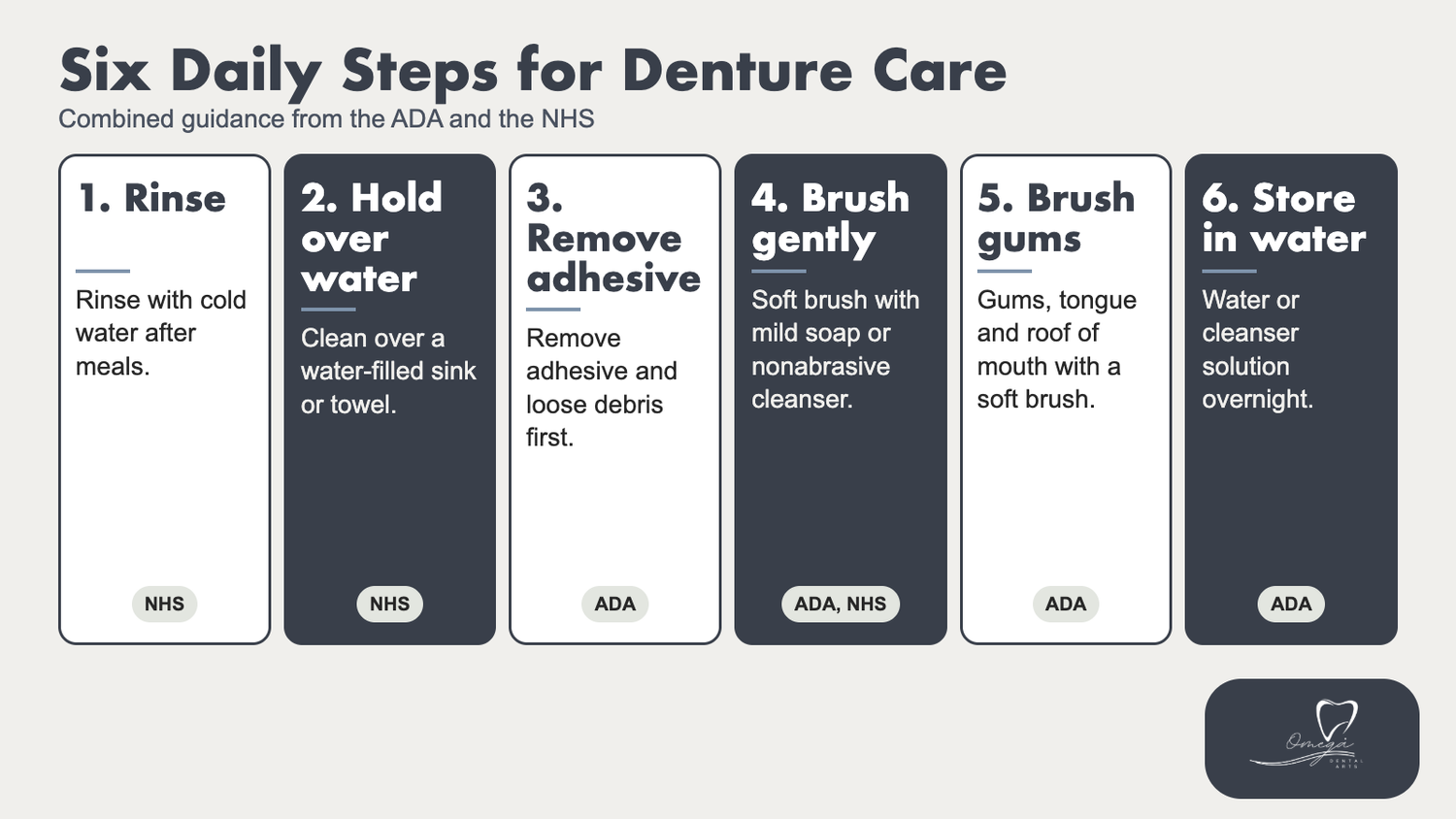
The graphic above shows the six steps in order. Patients who want the technique shown on their own appliance can ask about denture cleaning at a visit.
Anyone learning how to take care of dentures meets the night-time soaking question next.
Should You Soak Dentures Every Night?
Yes, you should soak dentures every night in water or a denture cleanser solution so they stay moist and keep their shape. The ADA says a denture kept in water or cleanser stays pliable and does not dry out. Cleveland Clinic recommends an overnight soak in denture solution.
Cambridge University Hospitals gives a product-specific exception. The leaflet advises against leaving dentures in cleaning tablet solutions overnight and describes a 10-minute soak once or twice a week. The cleanser label sets the soak time, as the ADA also says to follow manufacturer instructions.
What Should You Soak Dentures In at Night?
Plain water or a denture-cleansing solution is what to soak your dentures in at night, according to the ADA and the NHS. The NHS lists water, a polythene bag with damp cotton wool, an overnight cleaning solution or a denture bath. Plain water keeps the denture moist, and a cleanser adds a deeper clean.
The ADA adds that soaking in a cleaning solution can reduce the bacterial load, which may reduce denture odor. The ADA Seal of Acceptance marks cleansers evaluated for safety and effectiveness. A 2009 Cochrane review of six trials found brushing and chemical cleansers each appeared more effective than placebo at reducing denture plaque. The next question covers household soap.
Can You Use Dish Soap to Clean Dentures?
Yes, you can use mild dishwashing liquid to clean dentures, with warm water and a soft brush. The ADA lists mild hand soap or dishwashing liquid as an option, and the NHS names washing-up liquid. Mild liquid soap cleans without scratching the denture surface.
The ADA says to avoid bleach and powdered household cleansers because they may damage the denture. Strong or abrasive products belong in the next section.
What Not to Do with Dentures?
What not to do with dentures comes down to five habits: hot water, bleach, abrasive pastes, dry storage and overnight wear. The ADA warns against hot water, bleach and letting dentures dry out. The NHS warns against toothpaste and overnight wear.
The table below sorts common cleaning products by what the ADA, NHS and Cambridge University Hospitals say.
| Product | Safe for dentures? | Source |
|---|---|---|
| Mild soap or dishwashing liquid | Yes, with warm water and a soft brush | ADA, NHS |
| Denture cleanser tablet or solution | Yes, following the label | ADA |
| Regular toothpaste | Avoid, because it can scratch | NHS, Cambridge University Hospitals |
| Bleach or powdered household cleanser | No | ADA |
| Hot or boiling water | No, because it can warp the denture | ADA |
Each row matches the guidance in the sources named in the last column.
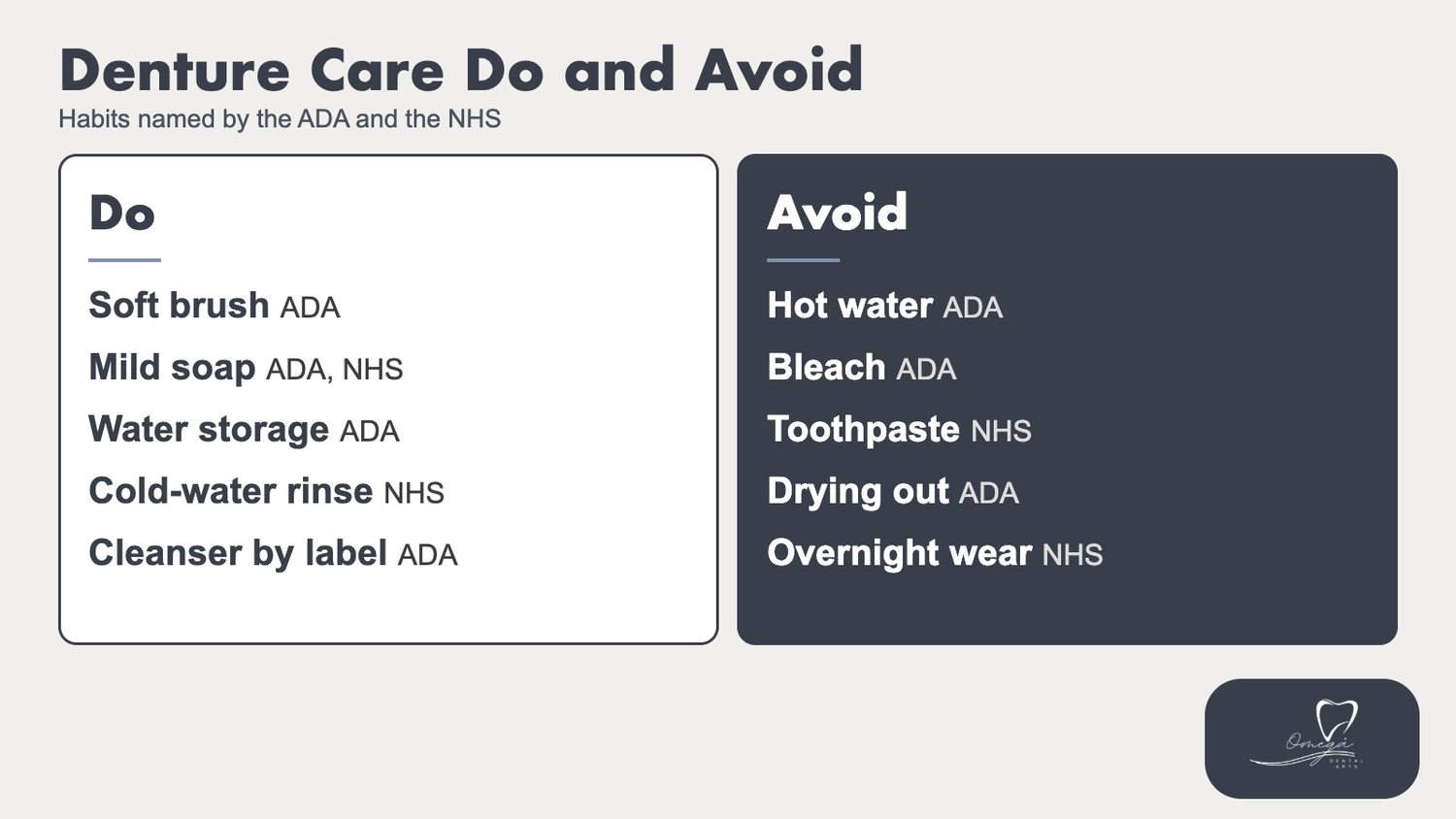
The comparison above groups the habits into do and avoid columns. Toothpaste needs a closer look, because sources differ on it.
Can You Use Regular Toothpaste on Dentures?
No, regular toothpaste is not recommended for dentures by the NHS or Cambridge University Hospitals, because abrasive pastes can scratch the surface. Scratches collect debris and stains, according to the Cambridge leaflet. The NHS says toothpaste could damage dentures.
The ADA lists toothpaste or soap with warm water and a soft brush as cleaning options. The ADA also says to use a nonabrasive cleanser. Soap or a denture paste avoids the scratching concern.
Should You Put Dentures in Your Mouth Wet or Dry?
You should put dentures in your mouth wet, rinsed after any cleanser soak. The ADA says water or cleanser keeps a denture from drying out. A damp, rinsed denture therefore goes back in, and the cleanser label gives the rinse step.
The ADA says water or cleanser keeps a denture pliable between wears. Overnight wear is the next habit to cover.
Is It Okay to Leave Dentures in All the Time?
No, it is not okay to leave dentures in all the time. Cleveland Clinic says dentures should be out at least 8 hours every day. The clinic says this rest gives the gums a break, reduces harmful oral bacteria and keeps the jawbone as strong as possible.
Research supports the rest period. The bullets below summarize what the NHS, one study and one review report.
- The NHS says trapped food raises the risk of gum infections and tooth decay.
- The NHS adds a choking risk when dentures stay in during sleep.
- A 2015 Journal of Dental Research study of adults aged 85 and older linked overnight wear to a 2.3-fold higher pneumonia risk.
- A 2024 systematic review in the Journal of Fungi lists continuous denture wearing among the main causes of denture stomatitis.
Those findings explain why sleeping with dentures gets its own answer.
Can You Sleep with Dentures In?
No, you should not sleep with dentures in unless your dentist recommends it, according to the NHS. Cleveland Clinic says most wearers sleep without them because it is more comfortable and lets the mouth tissues rest. Only a dentist's instruction changes that rule.
The dentist who placed the denture gives the exact schedule. Wearers follow that plan over general advice. The same plan sets daily wear time.
How Many Hours a Day Should I Wear My New Dentures?
New dentures are worn during the day and removed before bed. Cleveland Clinic says dentures need at least 8 hours out every day. Cambridge University Hospitals says to remove them after meals to clean and to take them out before bed. Daytime wear with night-time rest is the standard pattern.
The dentist can set a different schedule during the first days. Follow-up visits then adjust sore areas. Storage is the last part of the night routine.
Where Should You Store Dentures When You Do Not Wear Them at Night?
Store dentures in water or a cleanser solution when you do not wear them at night, as the ADA advises. The NHS also lists a polythene bag with damp cotton wool and a denture bath. A container of water is the simplest option.
Cambridge University Hospitals says to keep dentures in a container with water overnight. Hot water never belongs in the container. Gum care comes next in the routine.
Do I Still Need to Brush My Gums If I Have Dentures?
Yes, you still need to brush your gums if you have dentures. The ADA says to brush the gums, tongue and roof of the mouth every morning with a soft-bristled brush before inserting dentures. Morning brushing stimulates circulation and helps remove plaque.
Cleveland Clinic recommends brushing the gums, tongue, inner cheeks, palate and any remaining teeth twice a day. The NHS says to use fluoride toothpaste for gums, tongue and remaining teeth morning and evening. Regular mouth exams let a dentist check the tissues under the denture.
Daily advice on how to take care of your dentures includes the natural teeth that remain. Partial denture wearers have teeth to protect as well. Cambridge University Hospitals says partial dentures need extra care of the teeth and gums. Wearers can read about partial denture care for back-tooth appliances.
How Do You Care for New Dentures and Immediate Dentures?
You care for new dentures with the same daily routine plus extra attention to sore spots and fit. The ADA says new dentures may feel awkward for a few weeks. Sore spots are common 24 to 48 hours after first wear, according to Cambridge University Hospitals.
That leaflet says the dentist can address sore areas and that spots take up to a week to heal. Excess saliva in the first days settles as the mouth adjusts. Knowing how to care for new dentures includes booking the follow-up visit, such as denture checkups.
The same steps cover how to take care of new dentures at home. Wearers practice inserting and removing them, as the leaflet describes. Soft meals help during the first weeks, as covered in this healing diet guide.
Immediate dentures need one more plan. An immediate denture is placed the day the teeth are removed. The ADA says it may need a reline or remake after the jaw heals. The NHS says immediate dentures often need adjusting or replacing up to a year later. Anyone asking how to care for immediate dentures should follow the surgeon's first-day instructions.
When Do Dentures Need a Reline or Replacement?
Dentures need a reline or replacement when they become loose, sore, damaged or more than 5 years old. The ADA lists these red flags from the American College of Prosthodontists. More than 5 years since the denture was made is one of them. Cleveland Clinic gives an average lifespan of 7 to 10 years.
The ADA cites a prosthodontists position statement on evaluating dentures when at least one condition appears. The bullets below list the conditions in plain words.
- Chronic irritation or sores form under the denture base.
- Adhesive is needed to eat or more than once a day.
- The denture is unstable, cracked, broken, discolored or missing teeth.
- The natural teeth that support a partial denture change.
- More than 5 years have passed since the denture was made.
The graphic below sets these numbers beside the rest and adhesive figures from this guide.
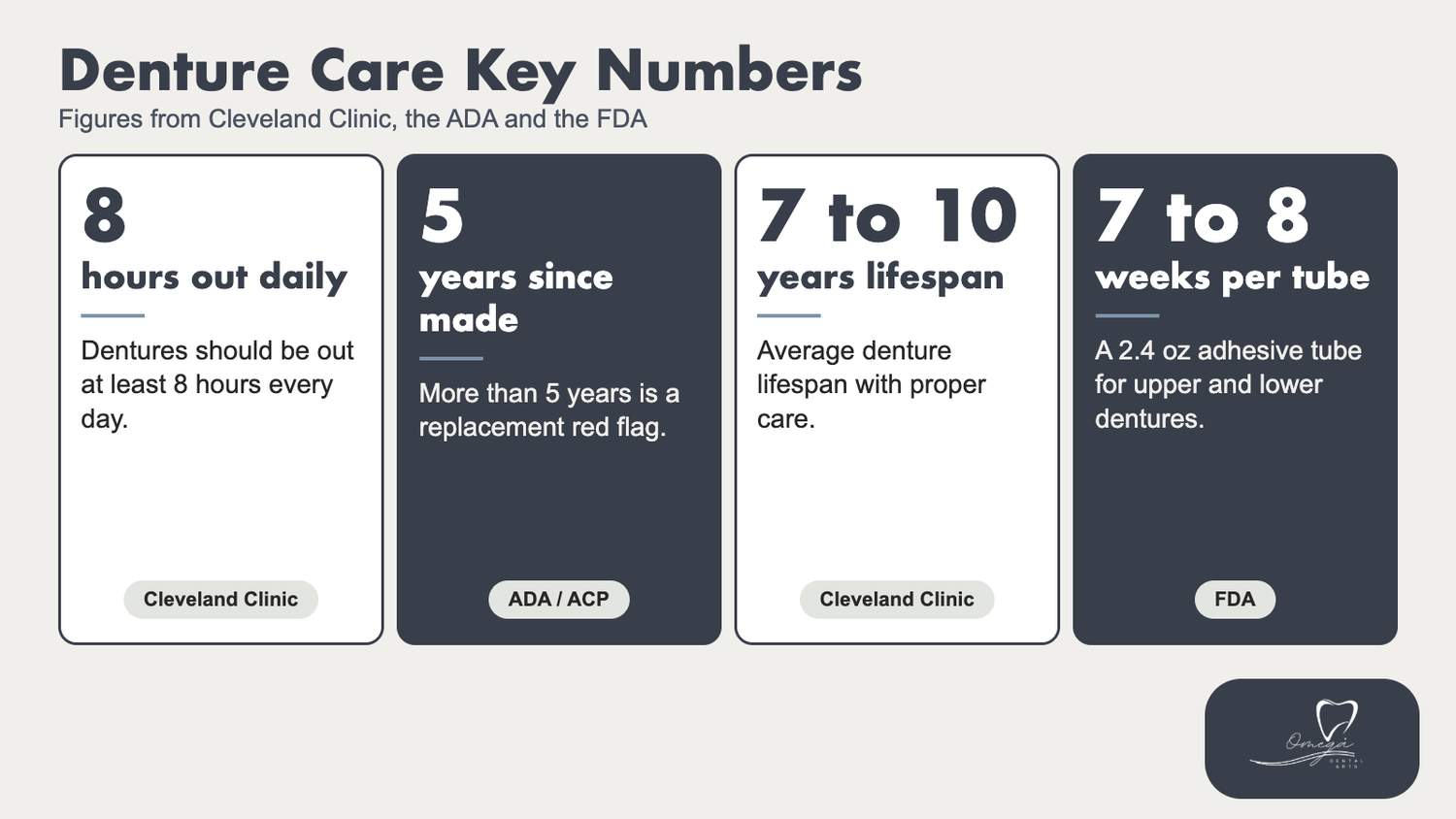
The NHS says to see a dentist when dentures click while talking, slip, cause pain or are worn or damaged. The NHS also lists very red or bleeding gums and bad breath as reasons to book a visit. Wearers can ask about denture replacement when these signs appear.
Visit timing matters too. Dentures change fit as the gums and bone change shape, so a dentist can check the fit at routine appointments. The dentist visit frequency guide explains how often to schedule those appointments.
How Much Denture Adhesive Should You Use?
Use 3 to 4 pea-sized dollops of denture adhesive on each denture, says the ADA, citing the American College of Prosthodontists. The FDA says a 2.4-ounce tube should last 7 to 8 weeks for a wearer with upper and lower dentures. Oozing adhesive means too much, per the FDA.
The FDA warns that some adhesives contain zinc, and overuse has been linked in case reports to numbness or tingling. The agency advises stopping the product and consulting a physician if those symptoms appear. The ADA adds that adhesive is not a remedy for an ill-fitting denture.
What Are the Side Effects of Wearing Dentures?
The side effects of wearing dentures include sore spots, extra saliva at first and denture stomatitis. The NHS lists a sore mouth, infections and difficulty eating or speaking when dentures are not cleaned or adjusted. Denture stomatitis affects 20 to 67 percent of wearers worldwide, according to a 2024 Journal of Fungi review.
That review ties the condition to ill-fitting dentures, continuous wear, poor hygiene and Candida fungus. The ADA says unclean dentures can build plaque, stains and calculus like natural teeth. Daily cleaning and nightly rest address those causes.
What Else Should You Know About Denture Care?
Should Dentures Touch the Roof of Your Mouth?
Yes, a full upper denture touches the roof of the mouth, because it rests on the palate for support. Cleveland Clinic says a full denture relies on the palate or the lower jawbone ridge. A lower denture rests on the jawbone ridge instead.
The dentist checks for areas that put extra pressure on the gums at the fitting. Reporting sore spots lets the dentist adjust those areas.
What Should You Do If Dentures Break or Feel Loose?
Stop wearing broken or loose dentures and book a dentist visit, as the NHS advises. The NHS says to bring any broken parts so the dentist can check whether a repair is possible. Bring any broken parts, and the ADA says a poorly fitting denture may need a reline or replacement.
A sudden break with pain or swelling warrants a call about denture emergencies. A loose fit alone is a regular appointment.
Do Implant-Retained Dentures Need Different Care?
Yes, implant-retained dentures need a little extra cleaning around the implants. Cleveland Clinic says removable implant-retained dentures come out at night to be cleaned and soaked. Nonremovable implant dentures need flossing underneath, according to the same clinic.
Patients exploring implant dentures can compare the care routines. Each denture type changes how to care for your dentures slightly. The ADA adds that removing an implant-supported denture gives access to the abutments for cleaning.
Daily brushing and flossing around the implants matter too. The guide on implant cleaning covers care after surgery.
Frequently Asked Questions
Can You Leave Dentures in a Quick-Soak Cleanser Overnight?
No, not unless the label says so. Quick-soak cleansers are made for short soaks, and Cambridge University Hospitals advises against overnight soaks in cleaning tablet solutions. The ADA says to follow manufacturer instructions on soak time.
Why Can't You Wear Your Dentures at Night?
Dentures should come out at night because the gums need rest. Cleveland Clinic says at least 8 hours out reduces harmful bacteria and protects the jawbone. The NHS adds that trapped food raises the risk of gum infection, decay and choking.
How Does Omega Dental Arts Help with Denture Care?
We help with denture care at every stage, from the first fitting to later adjustments, at our Cherry Hill office. Dr. Cho, Dr. Lin, Dr. Yeung and Dr. Silverman check the fit, address sore areas and review the cleaning routine with each patient. Patients asking how to get dentures can begin with an exam. Those learning how to care for dentures can ask at any visit.
Families can also read about new patients and what to bring to a first visit. The team answers denture questions during appointments and explains the daily routine at the fitting.
Wearers with a loose or sore denture do not need to wait for the next routine checkup. Questions about cleaning, fit or replacement are welcome, and wearers can contact the office to find a time.
Omega Dental Arts brings decades of combined experience to the practice, and Omega's dentists treat denture care as part of whole-mouth health.