Yes, you can eat with dentures, starting with soft foods cut into small pieces. The ADA says dentures make eating easier than having no teeth. New dentures may feel awkward for a few weeks, and Cleveland Clinic says full adjustment can take weeks or months. Sore spots are common 24 to 48 hours after first wear, according to Cambridge University Hospitals.
Key Takeaways
- Soft foods cut into small pieces are the starting point, according to the ADA and NSW Health.
- Chewing on both sides keeps dentures balanced, and biting with the front teeth can tip them, says Cambridge University Hospitals.
- Cleveland Clinic says adjusting to dentures takes weeks or sometimes months.
- MedlinePlus warns that dentures can make hot foods harder to feel.
- A 2017 clinical trial found natural teeth chew more efficiently than complete dentures, even with adhesive.
- NSW Health advises contacting the dentist about sores that do not heal within two weeks.
Can You Eat with Dentures After Getting Them?
You can eat with dentures after getting them, starting with soft, small-bite foods, according to the American Dental Association (ADA). Cleveland Clinic lists improved chewing function as a benefit of dentures. Eating gets easier as the muscles of the cheeks and tongue learn to hold the appliance steady.
Wearers who plan ahead for that learning period can ask about denture fitting before the first meal. The dentist checks how the denture sits and adjusts sore areas. The next two questions cover when eating can begin.
Can You Eat with Dentures in Your Mouth Right Away?
Yes, you can eat with dentures in your mouth right away, as long as the first meals are soft. Cambridge University Hospitals says dentures can be worn during the day and removed to clean after meals. NSW Health lists eggs, yogurt, fish and cooked vegetables as early foods.
Sore spots are common in the first days. The same hospital leaflet says sore spots are common 24 to 48 hours after first wearing new dentures. The dentist then addresses them at a follow-up visit.
Can You Eat with Temporary Dentures?
Yes, you can eat with temporary dentures using the same soft-food approach as with permanent ones. Cleveland Clinic says an immediate denture is worn right after extractions and is sometimes a temporary appliance. The NHS says immediate dentures may need adjusting or replacing up to a year later.
The ADA adds that an immediate denture may need a reline or remake after the jaw has healed. Meals therefore stay gentle while the gums change shape. The step-by-step method below applies to both types.
Patients expecting an immediate denture can read about post-extraction foods for the healing days.
How Do You Eat with Dentures Step by Step?
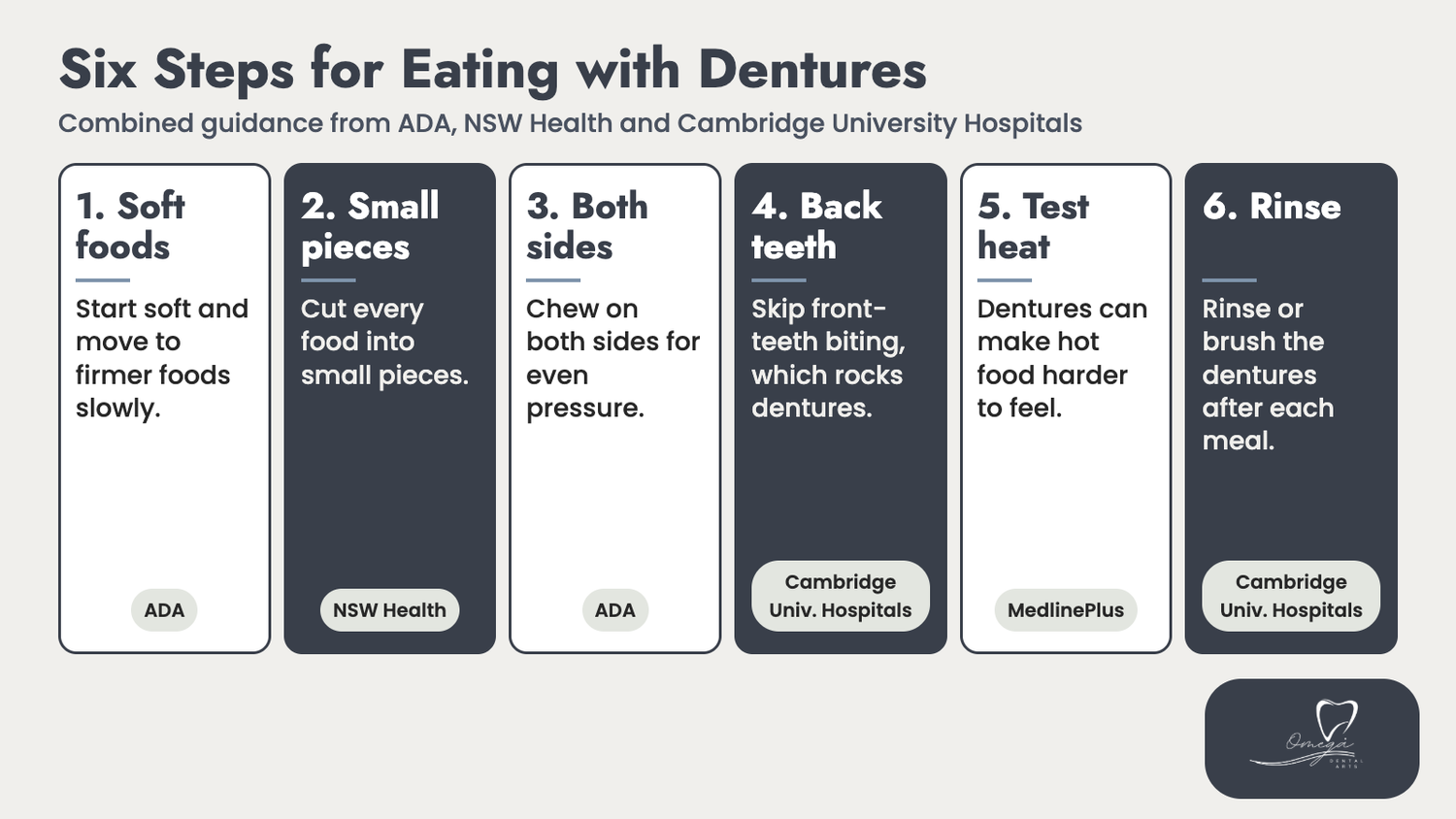
You eat with dentures by cutting food small, chewing on both sides, and starting with soft textures. The ADA, NSW Health and Cambridge University Hospitals give the same core advice. The numbered steps below combine their guidance in meal order.
- Start with soft foods, as the ADA advises, and move to firmer foods slowly.
- Cut every food into small pieces, as NSW Health recommends.
- Place food on both sides of the mouth to keep even pressure, per the ADA.
- Chew with the back teeth and avoid biting with the front teeth, which can rock the denture, says Cambridge University Hospitals.
- Test the temperature of hot food carefully, because MedlinePlus says dentures can make heat harder to feel.
- Rinse or brush the dentures after each meal, as Cambridge University Hospitals recommends.
The graphic below shows the same six steps as a sequence.
Is There a Trick to Eating with Dentures?
Yes, the main trick to eating with dentures is chewing on both sides at the same time. The ADA says even pressure on both sides keeps the denture steady. Cambridge University Hospitals says cutting food small also helps prevent tipping.
Wearers can practice the habit with soft foods first. The skill then carries over to firmer meals. A related question is whether dentures stay in during meals.
Should I Take My Dentures Out When I Eat?
No, you should not take your dentures out when you eat, because dentures are built to improve chewing. Cleveland Clinic lists improved chewing function as a benefit. Cambridge University Hospitals says to remove them after meals for cleaning, not during eating.
Dentures come out at night, not at the table. The hours-per-day answer appears in the final section of this post.
What Can You Eat with Dentures in the First Weeks?
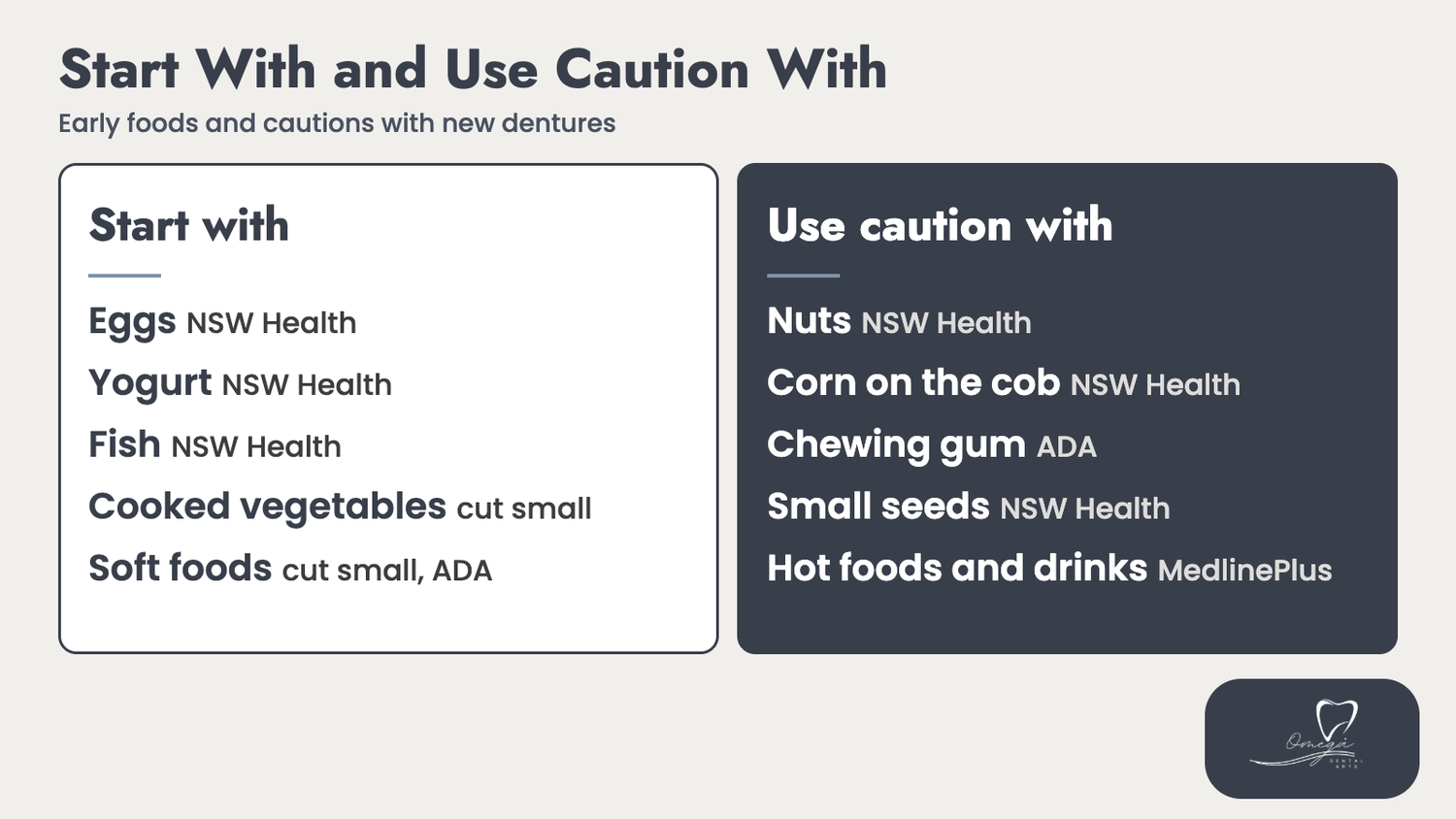
What you can eat with dentures at first is soft, moist food such as eggs and yogurt, according to NSW Health. The ADA says to start with soft foods cut into small pieces. NSW Health then advises returning slowly to a normal diet.
Wearers who ask what to eat with new dentures can use the list below as a starting menu.
- Eggs, which NSW Health lists as a soft starter.
- Yogurt, also named by NSW Health.
- Flaky fish, another NSW Health example.
- Cooked vegetables, cut into small pieces.
- Soft, moist foods in general, cut small per the ADA.
The table below sorts common foods by how each agency suggests handling them.
| Food Type | Examples | How to Handle It | Source |
|---|---|---|---|
| Soft protein | Eggs, fish | Start here in the first weeks | NSW Health |
| Dairy | Yogurt | Start here in the first weeks | NSW Health |
| Cooked vegetables | Soft, cut small | Start here, then add firmer textures slowly | NSW Health, ADA |
| Extremely hard foods | Nuts, corn on the cob | Avoid at first | NSW Health, ADA |
| Extremely sticky foods | Chewing gum | Avoid during adjustment | ADA |
| Small seeds | Seeds that lodge under the denture | Take care when eating | NSW Health |
| Hot foods and drinks | Soup, coffee | Test the temperature first | MedlinePlus, NSW Health |
The comparison graphic below summarizes the same two groups.
What Is the Easiest Thing to Eat with New Dentures?
The easiest thing to eat with new dentures is a soft, moist food such as scrambled eggs or yogurt. NSW Health lists eggs and yogurt among early foods. The ADA says soft foods cut into small pieces suit the adjustment period.
Texture matters more than the food itself. Softer textures need less pressure on healing gums. Firmer foods follow once the denture feels steady.
Will I Ever Be Able to Eat Normally with Dentures?
Yes, you can return to a normal, varied diet with dentures over weeks to months. Cleveland Clinic says getting used to dentures takes weeks or sometimes months. NSW Health says to return slowly to a normal healthy diet.
Chewing efficiency stays lower than with natural teeth. A 2017 trial in the Journal of Prosthetic Dentistry found dentate people chewed significantly more efficiently than complete denture wearers. Partial denture wearers can see how partial dentures handle chewing. That gap leads to the foods that need caution.
What Can You Not Eat with Dentures?
What you cannot eat with dentures during adjustment is extremely sticky or hard foods, according to the ADA. NSW Health names corn on the cob and nuts for the first weeks. The ADA also suggests skipping chewing gum while the mouth adjusts.
The agencies describe these limits for the adjustment period. Each person then follows the dentist's advice on adding firmer foods. The next answers cover the hardest foods and hot items.
What Are You Not Allowed to Eat with Dentures?
The ADA names extremely sticky or hard foods as the main foods not allowed during the adjustment period. NSW Health adds corn on the cob and nuts. NSW Health also asks wearers to take care with small seeds that can lodge under the denture.
The ADA frames what not to eat with dentures as cautions for adjustment, not lifelong bans. The dentist confirms when firmer foods are reasonable. Heat is a separate caution.
What Is the Hardest Food to Eat with Dentures?
The hardest foods to eat with dentures are nuts and corn on the cob, according to NSW Health. Both need strong biting force and can loosen the denture. The ADA groups them under extremely hard foods to avoid early on.
Cutting firm foods into small pieces lowers the effort. Corn can be cut from the cob. Small pieces also reduce the chance of seeds slipping under the denture.
Why Do Hot Foods Need Extra Care with Dentures?
Hot foods need extra care with dentures because dentures can make heat harder to feel, according to MedlinePlus. Wearers may not notice a burn until after it happens. NSW Health gives the same caution about hot foods and drinks.
MedlinePlus also says wearers may not notice biting on a bone. Fish and meat therefore deserve a careful look before eating.
Can You Bite into a Sandwich with Dentures?
No, you should not bite straight into a large sandwich with dentures, because front-teeth biting can tip the denture. Cambridge University Hospitals says biting with the front teeth rocks or tips dentures. NSW Health advises cutting food into small pieces and chewing on both sides.
Cutting a sandwich into small sections solves the problem. Wearers then chew with the back teeth on both sides. The same method applies to other handheld foods.
Can You Eat a Burger with Dentures?
You can eat a burger with dentures by cutting it into small pieces instead of biting through it. Cambridge University Hospitals says front biting rocks dentures, and NSW Health says to cut food small. Soft buns and moist fillings make the first attempts easier.
Wearers add firmer burgers as the denture feels steady. A fork and knife are practical at the start. The dentist can adjust any spot that rubs.
Will I Ever Be Able to Eat Pizza with Dentures?
Yes, you can eat pizza with dentures by cutting slices into small pieces and chewing on both sides. NSW Health and the ADA both advise small pieces and even chewing. Thin, soft slices come first.
The ADA says to avoid extremely sticky foods during adjustment. Firmer pizza follows once chewing feels comfortable.
Can You Eat Salad with Dentures?
You can eat salad with dentures by cutting leaves and raw vegetables into small pieces. NSW Health advises cutting all food small and taking care with small seeds. Chewing on both sides keeps the denture balanced during each bite.
Cooked vegetables are a gentler starting point. They appear on the NSW Health list of early foods. Raw salad can be added as the fit improves.
How Well Can Dentures Chew Compared with Natural Teeth?
Dentures chew less efficiently than natural teeth, according to a randomized crossover trial in the Journal of Prosthetic Dentistry (2017). The trial compared 17 complete denture wearers with 17 dentate controls. The dentate group chewed significantly better, with or without adhesive.
Adhesive did help within the denture groups. The same trial found masticatory efficacy was higher with one of the two adhesives tested. The FDA explains when adhesive fits into the picture.
Can You Eat with Dentures That Feel Loose?
You can eat with dentures that feel loose once a dentist checks the fit, according to the FDA. The FDA says shrinking bone can loosen dentures over time, and a reline or new dentures should follow. Denture adhesive can help dentures stay in place while you eat.
The FDA says properly fitted dentures should not usually need adhesive.
The FDA tells wearers to start with a small amount and to use no more than the label directs. Some adhesives contain zinc, and the FDA links excess use to nerve problems in case reports. Those reports involved at least two tubes a week.
What Is the Biggest Complaint About Dentures?
A frequent complaint about traditional dentures is shifting, according to Cleveland Clinic. Cleveland Clinic says many wearers find the appliance shifts, wobbles or slips while speaking or chewing. That movement is why eating techniques and fit checks matter.
The jawbone gradually shrinks after tooth loss, which loosens fit over time. The ADA says bone and gum ridges can recede and cause a poorly fitting denture. A dentist can reline or remake the denture to restore stability.
Do Implants Improve Chewing with Dentures?
Implants can improve chewing for some denture wearers, according to research. A 2018 systematic review in the Journal of Oral Implantology found mandibular implant-retained overdentures improved chewing ability compared with complete dentures. A 2007 review found the objective benefit limited to a lower implant overdenture for resorbed mandibles or poor adaptation.
Patients weighing options can compare dentures versus implants in our blog post. The comparison covers function, upkeep and candidacy.
The dentist reviews bone health, medical history and the fit of the current denture before suggesting any implant option. Cleveland Clinic notes that implant-retained dentures are removable and come out at night for cleaning and soaking.
Snap-on designs fall under implant overdentures, which attach to implants placed in the jaw.
When Should You Call a Dentist About Eating with Dentures?
You should call a dentist about eating with dentures when sores do not heal within two weeks, according to NSW Health. Cambridge University Hospitals says sore spots are common 24 to 48 hours after first wearing. Pain that keeps meals from happening needs a fit check.
Cleveland Clinic says several adjustments in the first couple of weeks are normal. Pain that keeps you from eating needs a fit check. The dentist reviews the bite and smooths any rubbing area.
A broken or cracked denture needs prompt attention, and our team handles dental emergency visits quickly.
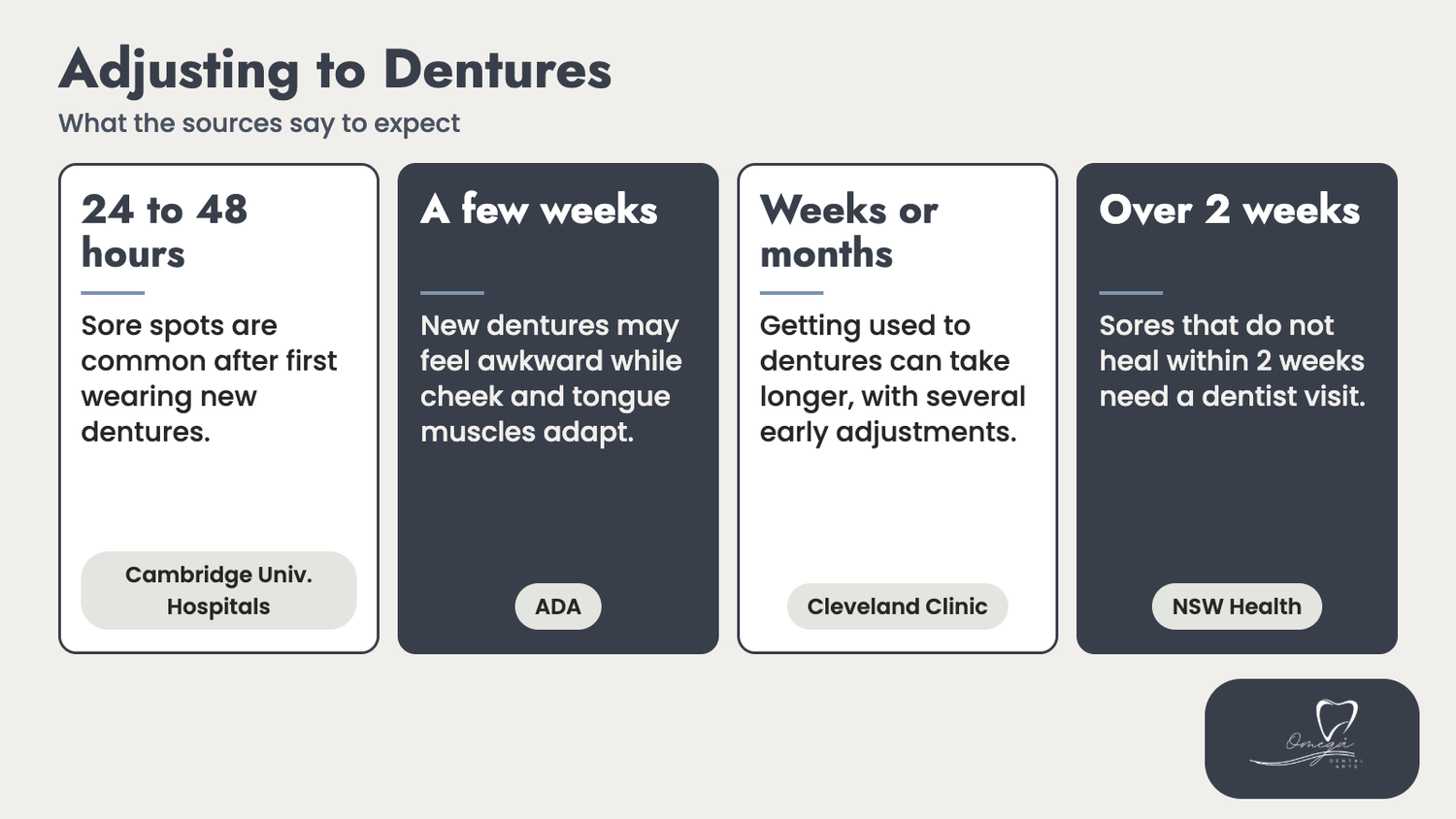
The timeline above uses the Cambridge University Hospitals, ADA and NSW Health figures from this section.
What Else Should You Know About Wearing Dentures While Eating?
How Many Hours a Day Should I Wear Dentures?
You should wear dentures during the day and keep them out for at least eight hours daily, according to Cleveland Clinic. Cleveland Clinic says people who wear dentures usually take them out at night. The gums then rest and the denture can soak.
Why Can't You Wear Your Dentures at Night?
You should not wear dentures at night, because trapped food raises gum infection and decay risk, says the NHS. The NHS also notes a choking risk during sleep. A 2015 Journal of Dental Research study linked overnight wear to about a 2.3-fold higher pneumonia risk in adults 85 and older.
Why Do You Lose Your Top Lip with Dentures?
Top lip support changes after tooth loss because the jawbone ridge shrinks. A 2012 systematic review in Clinical Oral Implants Research found horizontal bone loss of 29 to 63 percent six months after extraction. Cleveland Clinic says the jawbone gradually shrinks following tooth loss.
Do I Still Need to Brush My Gums If I Have Dentures?
Yes, you still need to brush your gums with dentures. The ADA says to brush the gums, tongue and roof of the mouth each morning with a soft brush before inserting dentures. Cambridge University Hospitals adds that brushing or rinsing after every meal limits food debris.
Routine oral exams also check gum health around the denture.
How Does Omega Dental Arts Help You Eat Comfortably with Dentures?
Omega Dental Arts helps denture wearers eat comfortably through fit checks, adjustments and clear guidance on soft-to-firm food progression. Our doctors review how each denture sits, address sore spots and plan relines when the fit changes. Patients in Cherry Hill can bring eating questions to every visit.
Anyone with a sore spot or a loose denture can call our office to arrange a visit. Our doctors check how the denture sits, smooth sore areas and plan a reline when the fit changes. The visit also covers food progression and questions about chewing, hot foods or adhesive.
Patients can bring a list of foods that feel hard to chew. The doctors then review each one with the denture in place. Follow-up visits track how the fit changes as the gums settle. A short denture adjustments appointment can address a rubbing spot or a loose fit.
We care for denture wearers at Omega Dental Practice with a gentle, patient-centered approach.