Wait 24 hours after a tooth extraction before you rinse, then rinse gently with warm salt water. Kent Community Health NHS Foundation Trust and UCLH NHS Foundation Trust both give the 24-hour rule. Kent advises 2 to 3 rinses a day for 3 days. UCLH advises at least 4 a day until the socket closes. Let the water fall out of the mouth instead of spitting.
Key Takeaways
- UCLH says not to rinse, spit, or touch the area for the first 24 hours.
- Kent says to rinse with 1 teaspoon of salt in 1 cup of warm water after 24 hours.
- Harvard Health says to let the rinse drip out of the mouth and not spit.
- Cochrane reports dry socket in 1% to 5% of routine extractions and upwards of 30% of surgical third molar extractions.
- UCLH says pain and swelling rise for 72 hours and then settle.
How to Rinse Mouth After Tooth Extraction
How to rinse mouth after tooth extraction comes down to one rule and a few steps. Wait 24 hours, then use warm salt water and tilt without swishing hard. The steps below follow the NHS leaflets from Kent and UCLH and the Harvard Health advice on spitting.
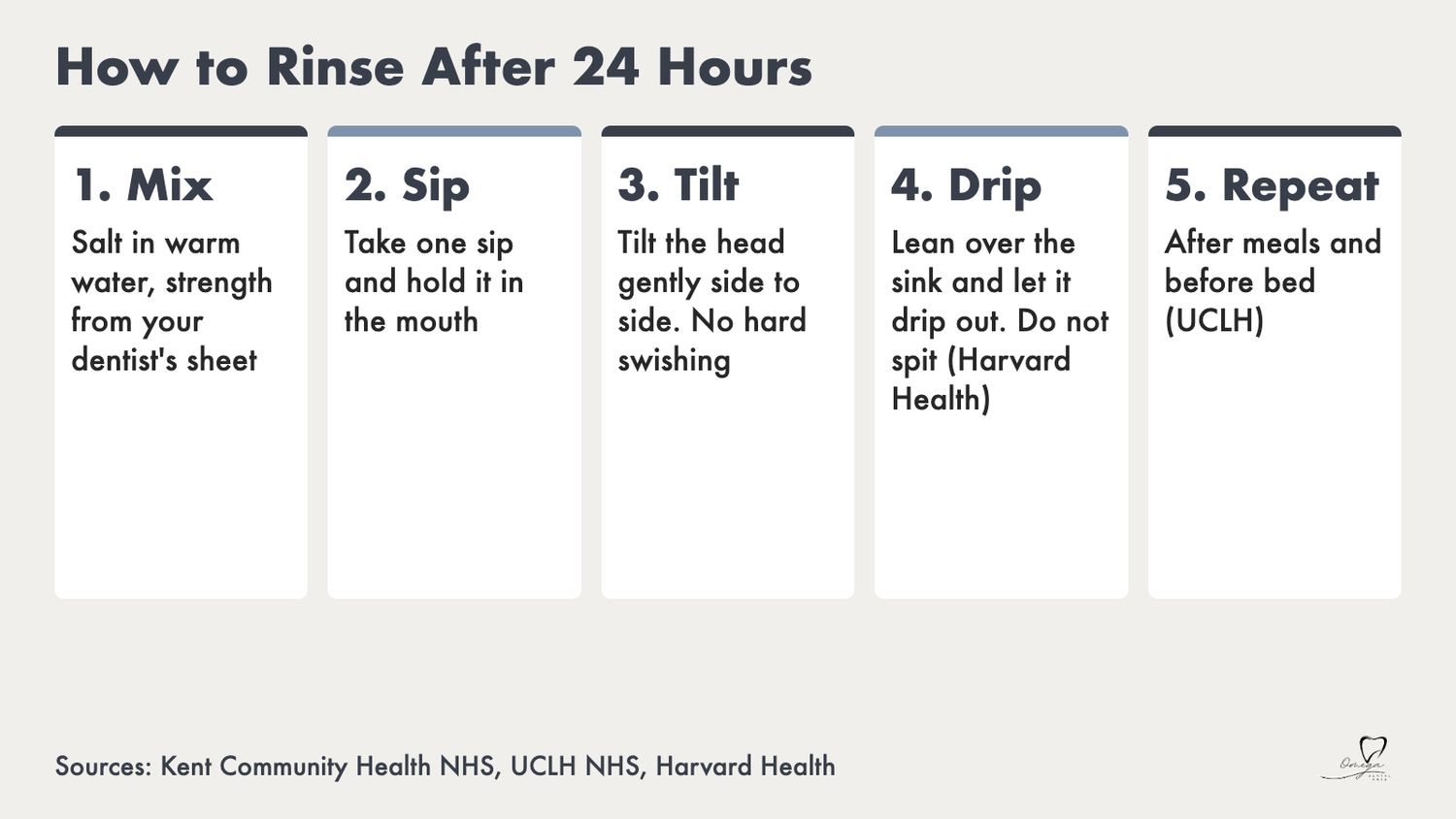
- Mix the salt in warm water and stir until it dissolves, as your dentist's sheet directs.
- Take one sip and hold it in the mouth.
- Tilt the head gently from side to side so the water reaches the socket.
- Lean over the sink and let the water drip out, as Harvard Health advises.
- Repeat after meals, and again before bed.
Dentists who perform dental extractions give a written sheet, and that sheet outranks any general guide. The graphic below shows the same four steps as a card sequence.
The next sections cover timing in detail.
| Detail | Kent Community Health | UCLH |
|---|---|---|
| Start | After 24 hours | After 24 hours |
| Salt | 1 teaspoon in 1 cup of warm water | 2 teaspoons in a large cup of cooled hot water |
| How often | 2 to 3 times a day | At least 4 times a day |
| How long | 3 days | 1 week or until the socket closes |
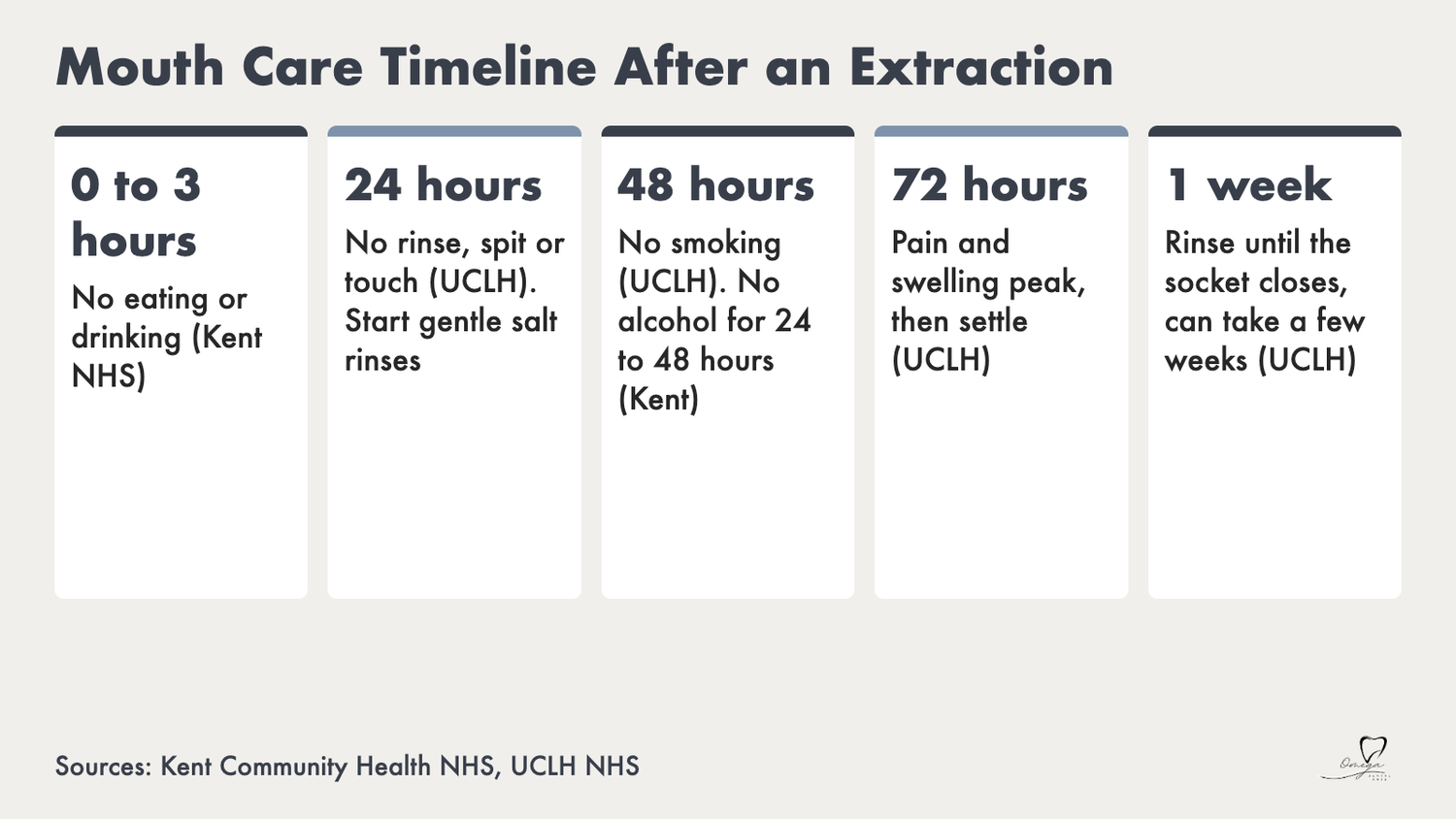
The two trusts differ on strength and length, so follow the numbers on your own discharge sheet. The graphic below shows the first week as a timeline.
When Can You Rinse Your Mouth After Tooth Extraction?
You can rinse your mouth after tooth extraction once 24 hours have passed. UCLH says not to rinse, spit, or touch the area for 24 hours so the blood clot stays in the socket. Kent says the same, and both leaflets then allow gentle salt water rinses. The eating timeline follows the same early hours.
The clot protects the socket while healing starts. Bleeding that restarts changes the timing, which the next question explains.
How Long After a Tooth Extraction Can I Rinse My Mouth Out?
You can rinse your mouth out 24 hours after a tooth extraction, and the clock restarts if bleeding returns. UCLH says that once thick red bleeding stops, the 24 hours begin again. Kent says a little blood in saliva looks like a lot but is minimal.
UCLH adds that bleeding still going after 1 hour of firm biting needs a call to the surgery. The next question covers what goes in the glass.
What to Rinse Mouth With After Tooth Extraction?
What to rinse mouth with after tooth extraction is warm salt water, according to both NHS trusts. Harvard Health lists salt water or a special mouthwash. Kent and UCLH name only salt water, so a prescribed rinse comes from your dentist.
Warm water is the safe choice, and UCLH says to let the water cool until it cannot burn the mouth. Mouthwash questions come next.
What Is the Best Mouthwash to Use After Tooth Extraction?
The mouthwash to use after tooth extraction is the one your dentist prescribes, and chlorhexidine has the strongest trial evidence. A Cochrane review of 49 trials found that 0.12% or 0.2% chlorhexidine rinses cut dry socket odds. The odds ratio was 0.38. Cochrane also lists taste change and tooth staining as minor effects.
That result applies to rinses used before and 24 hours after surgery, as a dentist directs. Brushing questions follow.
Do I Brush My Teeth Before or After a Salt Water Rinse?
You can brush before or after a salt water rinse, because neither UCLH nor Harvard Health sets an order. UCLH says normal tooth cleaning restarts 24 hours after the extraction. Harvard Health says to avoid brushing around the extraction site for at least 24 hours.
Brushing the other teeth gently and keeping the bristles off the socket follows both sources. The next question covers how many rinses a day.
How Often Should You Rinse After Tooth Extraction?
Rinse 2 to 3 times a day for 3 days under Kent's leaflet. UCLH's leaflet says at least 4 times a day. UCLH says to rinse especially after eating. UCLH continues rinses for one week or until the socket closes completely.
Closure can take a few weeks, according to UCLH. Extraction aftercare is part of extraction aftercare at a dental office. The following section explains the clot risk behind these limits.
Can You Rinse Your Mouth After Tooth Extraction Without Causing Dry Socket?
Yes, you can rinse your mouth after tooth extraction without causing dry socket when the rinse starts late and stays gentle. Harvard Health names forcible spitting and straws as the pressure that can pull a clot out. Cochrane describes dry socket pain as starting 2 to 3 days after surgery.
Dry socket frequency depends on the extraction type. The chart below shows the Cochrane range.
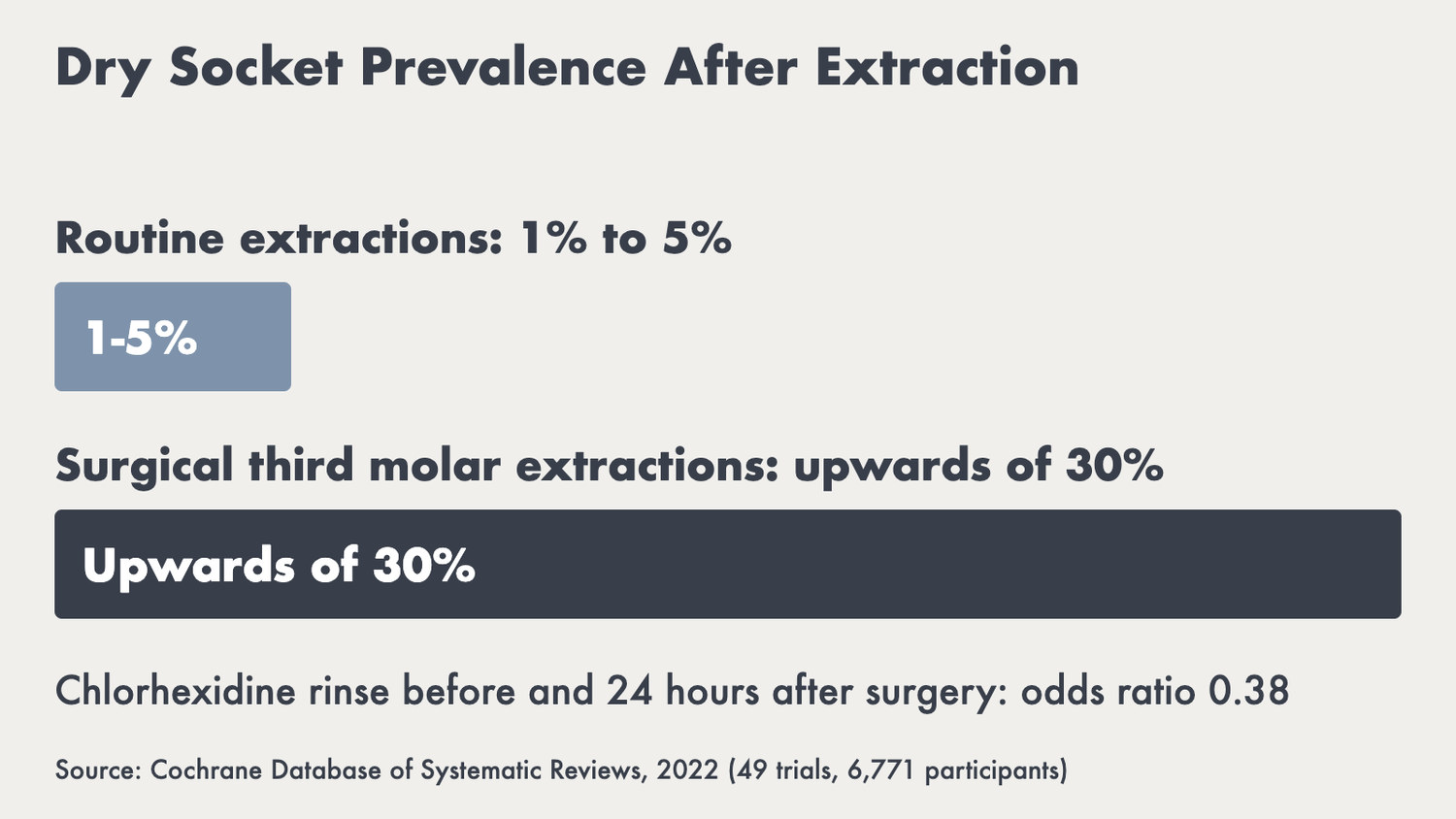
The chart matches the Cochrane figures: 1% to 5% for routine extractions and upwards of 30% for surgically extracted third molars. The dry socket pain are covered in a separate post.
What Happens If You Don't Rinse with Salt Water After Extraction?
Not rinsing with salt water after extraction skips the routine cleaning step that the NHS leaflets prescribe. Neither Kent nor UCLH names a specific complication from skipping it. UCLH asks for rinses after eating, so food does not sit around the socket.
Brushing the other teeth and following the leaflet keeps the routine complete. Foods that suit a healing socket appear in the what to eat post. The next question covers an early rinse.
What Should You Do If You Accidentally Rinsed Your Mouth After Tooth Extraction?
After an accidental rinse, stop rinsing and leave the socket alone until the 24 hours pass. UCLH says rinsing and spitting can dislodge the blood clot. UCLH asks patients with severe pain or persistent bleeding to contact the surgery.
One sip that moved the water around is not a reason to panic. Water contact is the next question.
Is It Okay If Water Touches a Tooth Extraction?
Yes, it is okay if water touches a tooth extraction during normal drinking. Kent says you may drink normally but should not rinse and spit for 24 hours. UCLH says not to touch the area, which includes the tongue.
The rule targets swishing and suction, not a sip of water. Questions about the socket go to the dentists who handle oral surgery. The next heading covers whole-mouth care.
What Is Normal Mouth Care After Tooth Extraction?
Normal mouth care after tooth extraction is gentle brushing, salt water rinses, soft food, and no smoking for 48 hours. UCLH lists these steps and adds no strenuous exercise for 24 hours. Kent adds no alcohol for 24 to 48 hours after the extraction.
Smoking timing has its own post on smoking timeline rules. The next questions cover dryness and sores.
Why Is My Mouth Dry After Tooth Extraction?
Dry mouth after tooth extraction has several possible causes, and NIDCR lists medicines as one cause. NIDCR says hundreds of medicines reduce saliva, and disease, radiation, chemotherapy, and nerve damage also cause dry mouth. NIDCR says dry mouth is not a normal part of aging.
NIDCR advises 8 to 12 cups of water a day, sugarless gum, no tobacco or alcohol, and a humidifier at night. The alcohol after extraction post covers drink timing. Sores come next.
Are Sores in Mouth After Tooth Extraction Normal?
Sores in mouth after tooth extraction can come from biting the cheek or lip while numb. The NHS says mouth ulcers clear within a week or 2. Kent says the bite is painless while numb and hurts when feeling returns. The NHS says to see a GP or dentist if an ulcer lasts longer than 3 weeks.
The NHS advises avoiding spicy, salty, and acidic food while an ulcer heals. Healing signs are next.
What Are the Signs That a Tooth Extraction Is Healing Well?
Signs that a tooth extraction is healing well include a red tinge in saliva and soreness that settles after 72 hours. UCLH says pain and swelling rise for 72 hours and then settle. UCLH says discomfort can last a couple of weeks. A sore jaw is covered in its own post.
The healthy socket look is shown in a separate post. The next section lists the extras.
What Else Should You Know About Rinsing After a Tooth Extraction?
What Is the Worst Day After a Tooth Extraction?
The worst day after a tooth extraction falls around the 72-hour mark, because UCLH says pain and swelling increase for 72 hours. UCLH says they then start to settle. Cochrane places dry socket pain 2 to 3 days after surgery.
What Should I Do on the First Night After Tooth Extraction?
On the first night after tooth extraction, rest, keep soft food only, and skip rinsing. Kent says to take it easy and avoid bending, heavy lifting, and exercise. Kent adds that a towel over the pillow soaks up saliva and blood.
What Not to Do Immediately After Tooth Extraction?
Immediately after tooth extraction, do not rinse, spit, touch the socket, smoke, or drink alcohol. Kent also says not to suck or poke the wound with a finger or tongue. Kent and UCLH both say to avoid aspirin because it can restart bleeding.
How Soon Can I Drink Water After Tooth Extraction?
You can drink water after tooth extraction once the first 3 hours pass, according to Kent. Kent says to avoid eating and drinking for 3 hours and then drink normally. Harvard Health says to avoid straws because suction can pull out the clot.
Will Slurping Cause Dry Socket?
Yes, slurping can raise the chance of dry socket, because Harvard Health says negative pressure can pull the clot out. Harvard Health names forcible spitting and straws as examples of that pressure. Slurping creates the same suction, so sip quietly instead.
Frequently Asked Questions
Can I Eat 3 Hours After Tooth Extraction?
Yes, you can eat 3 hours after tooth extraction, and Kent recommends soft food chewed on the other side of the mouth. Kent says not to eat or drink for the first 3 hours.
What Kind of Soft Food Should I Eat After Tooth Extraction?
Soft food after tooth extraction includes pasta, mashed potato, scrambled egg, and soup, according to UCLH. UCLH recommends soft food for the first few days.
How Many Days Should I Bed Rest After a Tooth Extraction?
Bed rest after a tooth extraction is not set in days by Kent or UCLH. Kent says to take it easy for the rest of the day, and UCLH says to avoid strenuous exercise for 24 hours.
How Does Omega Dental Arts Help With Rinsing After a Tooth Extraction?
We explain how to rinse mouth after tooth extraction at the visit. We put the rinse start time, salt strength, and rinses per day in writing. Our team in Cherry Hill, NJ answers questions after the visit. Patients with severe pain or bleeding that will not stop can reach our urgent dental help team.
The doctors at Omega Dental Center follow the same 24-hour rule described above.