Immediate dentures before and after shows teeth replaced the day they come out, with a denture that protects the healing gums. Healthline reports the first removal comes after about 24 hours. The NHS says immediate dentures often need adjusting or replacing up to a year later as the gums change shape. The ADA says new dentures feel awkward for a few weeks.
Key Takeaways
- The ADA says an immediate denture goes in the same day the remaining teeth are removed.
- The NHS states that immediate dentures can usually be made within a few days.
- The UCLH NHS trust reports that pain and swelling after extraction rise for 72 hours, then settle.
- A 2012 review found 29% to 63% horizontal bone loss within six months of extraction.
- The ADA says new dentures feel awkward for a few weeks and need follow-up fit checks.
What Do Immediate Dentures Before and After Look Like?
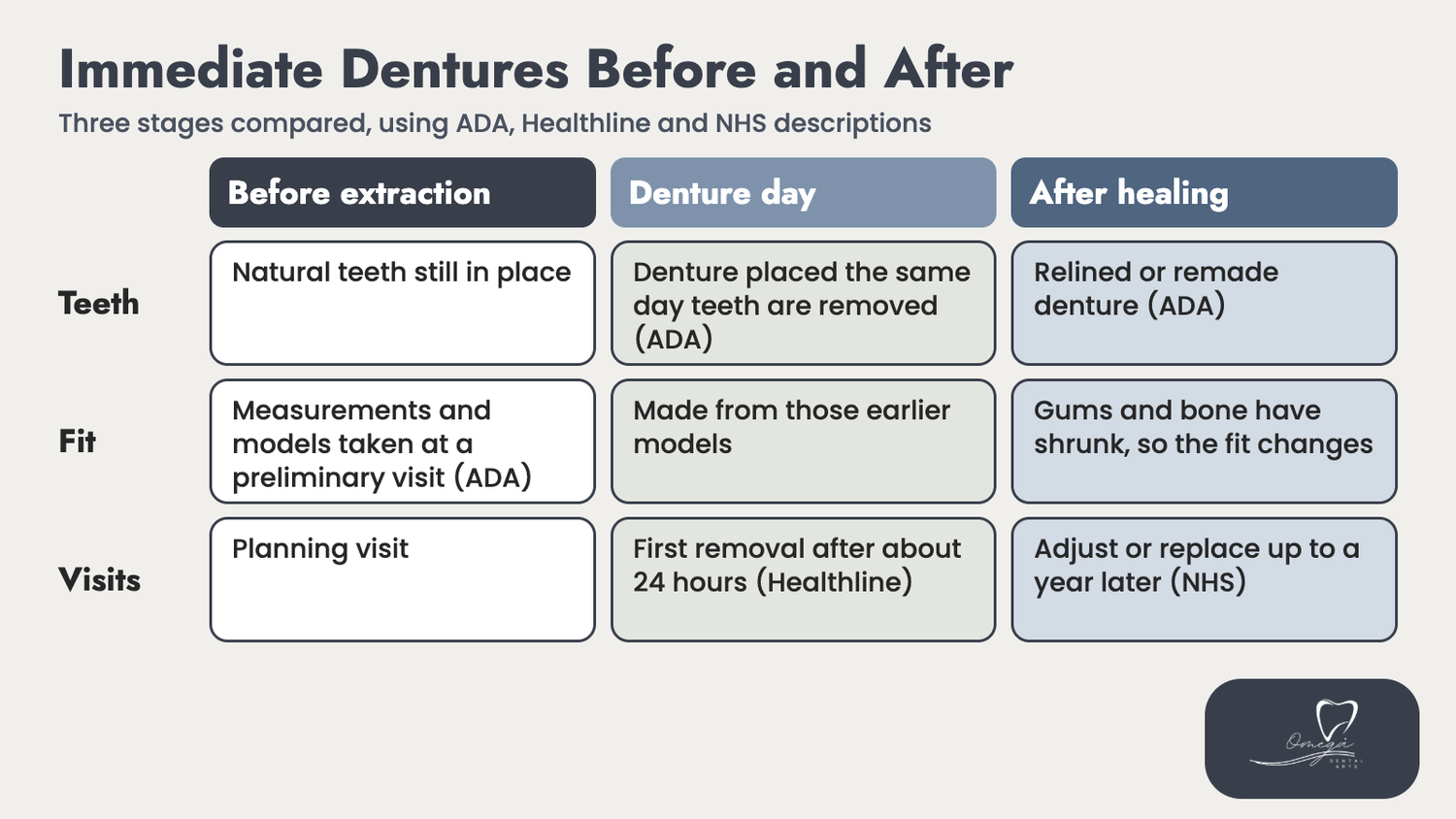
Immediate dentures before and after results show natural teeth replaced by a gum-colored denture on the day of extraction. According to the ADA, the denture goes in the same day the remaining teeth are removed. You leave the appointment with teeth in place instead of a gap.
The denture also covers the fresh sockets while they heal. The ADA notes that the wearer does not have to go without teeth during the healing period. Our team plans immediate denture planning around which teeth stay and which come out.
A smile before and after dentures changes in two stages. The first stage is the extraction-day result, and the second is the settled result after healing. Full immediate dentures before and after photos therefore show two different fits.
The infographic below compares the mouth before extraction, on denture day, and after healing.
How Long Does It Take a Dentist to Make Immediate Dentures?
A dentist can make immediate dentures within a few days, according to the NHS. The wait is short because the denture is built from models taken before the teeth come out. Planning visits come first, then the extraction and placement visit.
The ADA says the dentist takes measurements and makes models of your jaw during a preliminary visit. The steps below follow that order from first visit to final fit.
- The dentist records measurements and models of the jaws at a preliminary visit, per the ADA.
- The laboratory builds the denture, which the NHS says can usually take a few days.
- The dentist removes the remaining teeth and places the denture the same day.
- The denture stays in until the first removal, which Healthline puts at about 24 hours.
- Follow-up visits check the fit and adjust sore spots.
- The dentist relines or remakes the denture after the jaw heals, says the ADA.
Some full-mouth plans use a staged approach. Healthline describes removing back teeth first, then waiting about 4 to 8 weeks before making the denture. The same page says front teeth come out when the denture is ready.
What Happens From Day One to the First Weeks After Immediate Dentures?
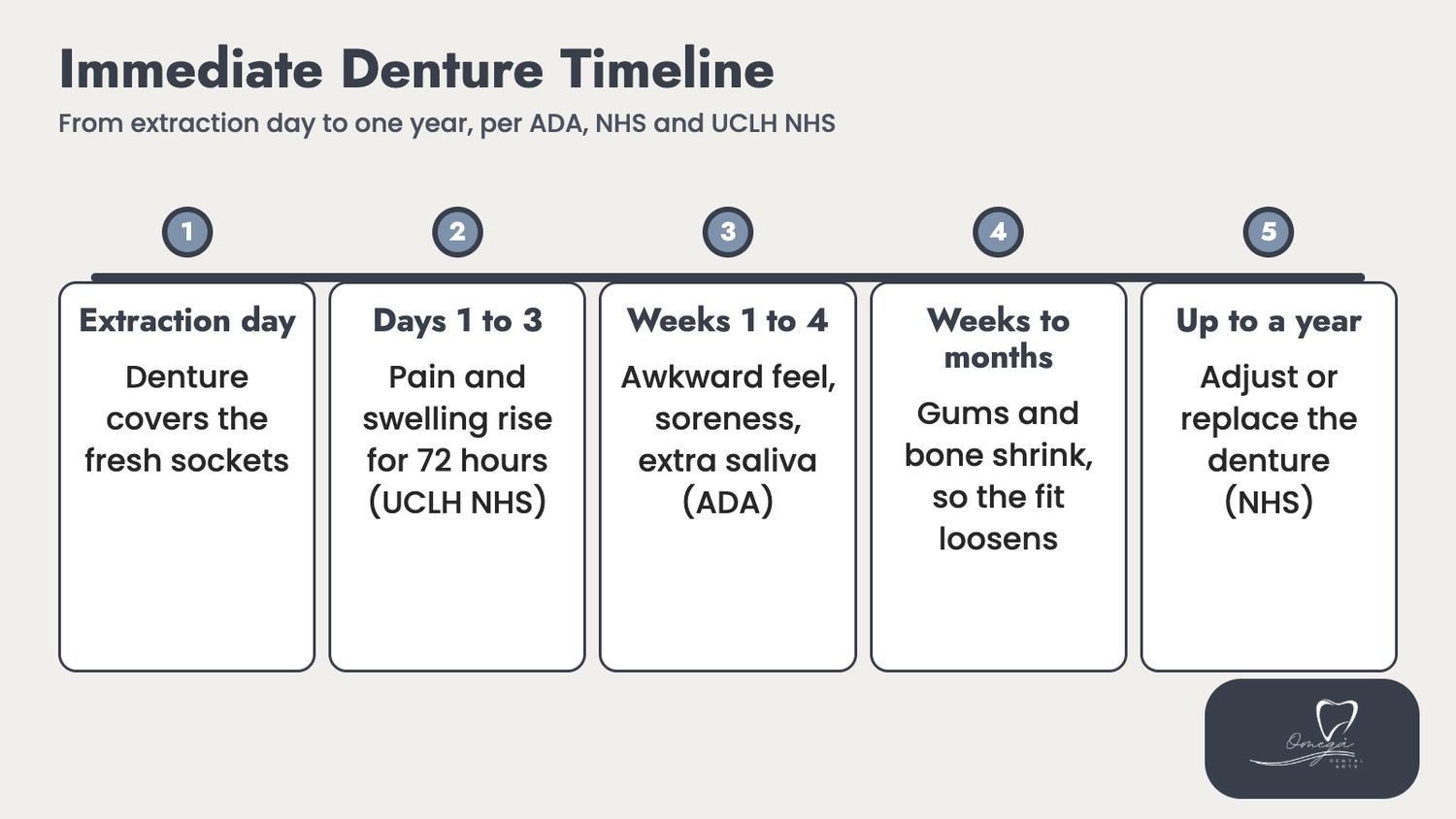
The first weeks after immediate dentures bring swelling, soreness, extra saliva and a changing fit. The ADA says new dentures may feel awkward for a few weeks. Each symptom has a typical window that the table below summarizes.
| Period | What changes | What the dentist does |
|---|---|---|
| Extraction day | The denture covers fresh sockets | Places and fits the denture |
| Days 1 to 3 | Pain and swelling rise for 72 hours (UCLH NHS) | Sees you for a first check |
| Weeks 1 to 4 | Soreness, extra saliva, awkward feel (ADA) | Adjusts sore spots |
| Weeks to months | Gums and bone shrink, so the fit loosens | Relines or remakes the denture (ADA) |
| Up to a year | Mouth shape keeps changing (NHS) | Adjusts or replaces the denture |
The graphic below turns the same timeline into a visual sequence.
How Painful Are Immediate Dentures?
Immediate dentures cause soreness because they sit over fresh extraction sites. The UCLH NHS trust reports that pain and swelling after extraction rise for 72 hours, then settle. Your dentist treats persistent sore spots by adjusting the denture.
A 2025 systematic review of 19 studies found complications were generally low. The same review named postoperative pain and loss of retention as the main concerns. Pain control comes next to eating, because chewing tests every sore spot.
Is It Hard to Eat With Immediate Dentures?
Yes, eating with immediate dentures takes practice at first. The NHS says it can take a few weeks to get used to dentures. Softer foods help until you are comfortable with your regular diet.
The NHS suggests practicing taking dentures in and out and eating softer foods. A 2025 review also reported a temporary drop in chewing efficiency after delivery that typically improved after six months. The ADA adds that eating becomes easier with dentures than without teeth.
Our post on eating timelines covers the extraction side of food choices. Night-time habits matter as much as meals, so the next question covers sleep.
How Many Nights Should You Sleep With Immediate Dentures?
You should sleep with immediate dentures in for the first night or two only if your dentist says so. Healthline reports the first removal comes after about 24 hours. Your dentist sets the exact number of nights for your extractions.
A 2025 systematic review notes that some protocols wait 48 hours before removal for cleaning. After healing, the NHS says not to wear dentures overnight unless your dentist recommends it. Cleveland Clinic advises taking dentures out at least eight hours a day.
A 2015 Journal of Dental Research study of adults 85 and older linked overnight wear to about a 2.3-fold higher pneumonia risk. Overnight rules end quickly, so day five brings a different set of tasks.
What Should You Do on Day 5 After Getting Immediate Dentures?
On day 5 after getting immediate dentures, clean the denture gently, stay with soft foods and report persistent sore spots. UCLH says pain and swelling settle after the first 72 hours. Gentle cleaning protects the healing gums and the denture.
The ADA recommends a soft bristle toothbrush and a non-abrasive cleanser for dentures. Kent Community Health NHS says salt rinses begin after the first 24 hours. The NHS says to see your dentist if the denture slips or stops fitting properly.
Why Do Immediate Dentures Look So Big?
Immediate dentures look so big at first because the gums are swollen and the denture is built before the sockets shrink. UCLH reports swelling peaks within 72 hours. The fuller look settles as swelling falls and the gums remodel.
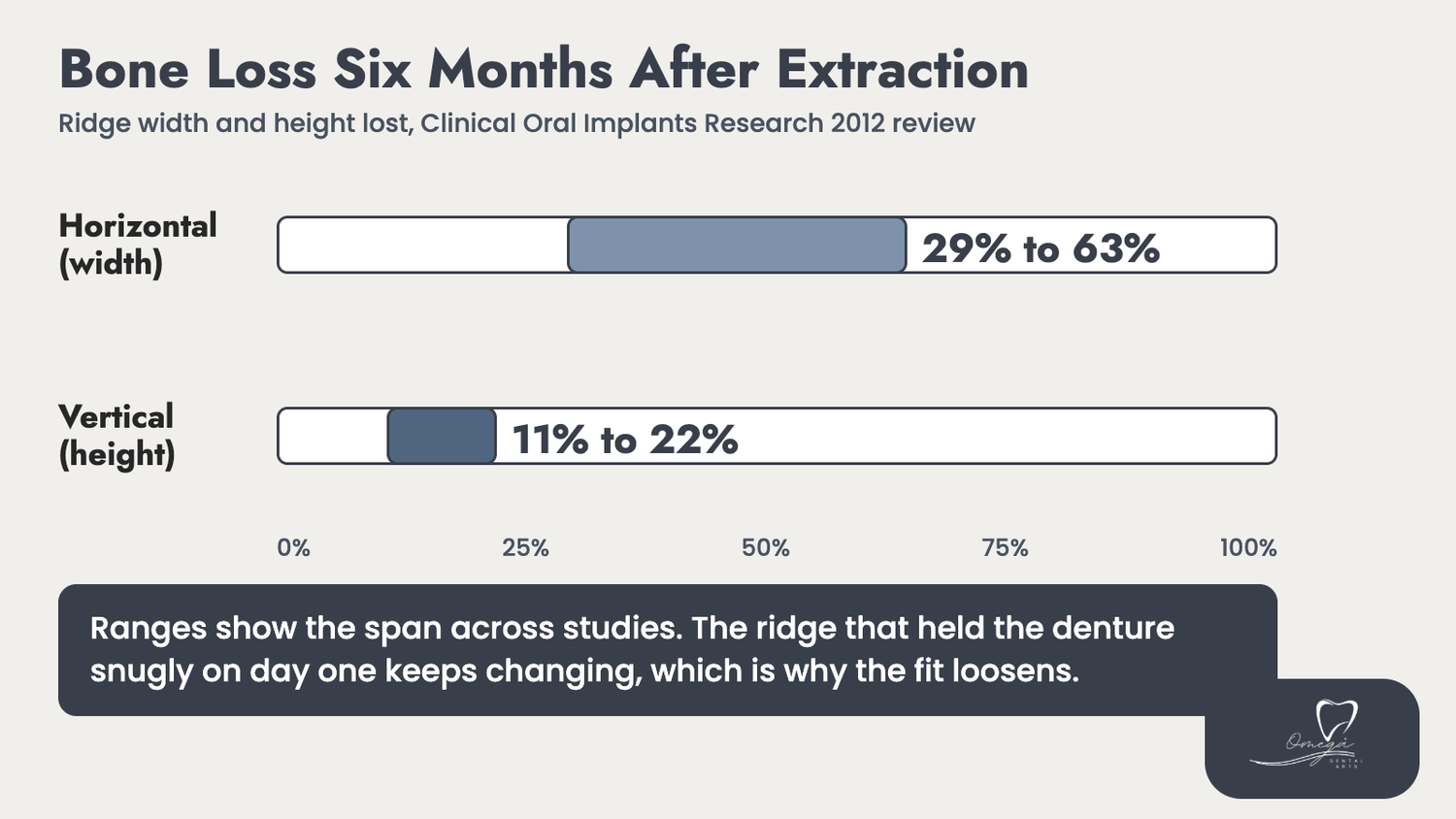
A 2012 review in Clinical Oral Implants Research measured 29% to 63% horizontal bone loss within six months of extraction. Vertical loss measured 11% to 22% over the same period. The gum ridge that held the denture snugly on day one keeps changing.
The chart below shows those ranges next to the typical review points.
Do Immediate Dentures Look Fake?
Immediate dentures can look fake when the fit is bulky or loose, because the denture is made before the gums settle. Healthline says immediate dentures are not custom-fitted like permanent ones. A reline or remake improves the fit after healing.
The ADA says dentures can help fill out the appearance of the face and profile. The ACP states that matching each person's smile and bite can improve facial appearance. Natural-looking results depend on that final fit more than on the first day.
Why Do You Lose Your Top Lip With Dentures?
You lose top lip support with dentures because the jawbone shrinks after teeth are removed. Cleveland Clinic says the jawbone gradually shrinks after tooth loss. Less bone under the lip means less lip support over time.
A 2025 review summarized a 21-patient cephalometric study of immediate denture wearers. The study found a marked change in jaw position, chin and lip profile during the first six months of denture use. Continuing ridge loss changed the profile further by year two.
Will Your Face Go Back to Normal After Dentures?
Your face can look fuller with dentures, but dentures do not stop bone shrinkage. The ADA says losing all teeth can make facial muscles sag and dentures help fill out the face and profile. Relines keep that support in place as the ridge changes.
The NHS says immediate dentures often need adjusting or replacing up to a year later. Our team schedules dental checkups so the fit gets reviewed as the mouth changes.
How Do You Avoid a Denture Face?
You avoid a denture face by keeping the denture fitted as the jaw changes. Cleveland Clinic ties sunken cheeks to the jawbone shrinking after tooth loss. Timely relines and replacements keep the denture matched to the gums.
Implant-supported options attach the denture to implants in the jaw. Cleveland Clinic describes implant-supported dentures as non-removable. Our snap-on implants page explains how an overdenture attaches.
What Do Full Dentures Before and After Look Like at 40?
Full dentures before and after at 40 follows the same timeline as any age, with a slower bone-loss history behind it. NIDCR reports adults 35 to 49 average 25.6 remaining teeth. Only 1.2% of adults 35 to 49 have no teeth, so a full set at 40 is uncommon.
Before and after dentures at 40 often starts with partial dentures instead. Partials replace one or a few teeth and keep remaining teeth in place, per MedlinePlus. Our molar partials post covers that route.
Is It a Good Idea to Get Dentures in Your Forties?
Getting dentures in your 40s is a clinical decision made with your dentist. The ADA says dentures replace teeth lost to gum disease, decay or injury and make eating and speaking easier. Your dentist weighs every option against the teeth you still have.
The ACP says dentures can improve facial appearance, speech problems from missing teeth and chewing. Our post on replacement options compares dentures with implants.
How Many People Over 40 Have Dentures?
NIDCR does not report denture wearers by age, but it reports tooth loss by age. In the 2017 to March 2020 survey, 1.2% of adults 35 to 49 had no remaining teeth. Adults 20 to 64 average 26 remaining teeth, down from 32.
These figures describe complete tooth loss, not partial denture use. Adults 35 to 49 average 25.6 teeth, so most still keep many natural teeth.
Do Dentures Make You Look Older or Younger?
Dentures make you look younger than complete tooth loss does, according to the ADA. The ADA says that without teeth, facial muscles can sag and make you look older. Dentures fill out the face and profile when the fit is good.
Fit matters because Cleveland Clinic notes the jawbone keeps shrinking. A worn denture stops supporting the cheeks and lips as well as a fresh one.
Which Is Easier, Top or Bottom Dentures?
Top dentures are easier to keep in place than bottom dentures, based on the support each arch offers. The upper denture rests on the gums and the palate, while the lower denture rests on the jawbone ridge, per Cleveland Clinic. The lower denture has less surface to rest on than the upper one.
Top dentures before and after results usually feel steadier, and before and after bottom dentures results depend more on the ridge. A 2025 review named loss of retention as a main concern, especially for mandibular dentures. The table compares both arches.
| Feature | Top denture | Bottom denture |
|---|---|---|
| Support | Gums and the palate | Lower jawbone ridge |
| Retention concern | Palate adds support | Flagged for mandibular dentures (2025 review) |
| Muscle help | Cheek and tongue muscles help hold it (ADA) | Cheek and tongue muscles help hold it (ADA) |
Both arches need follow-up visits. The ADA says dentures may feel loose while the cheek and tongue muscles learn to keep them in place.
Is It a Good Idea to Get Immediate Dentures?
Getting immediate dentures is a good idea when you want teeth in place on extraction day. The ADA says you do not go without teeth during healing. The tradeoff is a changing fit that needs follow-up.
A one-year survey summarized in a 2025 systematic review found immediate denture patients may have discomfort in the first year. Those patients were generally satisfied with their dentures. Your dentist can match the timing to your extractions.
What Are the Downsides of Immediate Dentures?
The downsides of immediate dentures are a changing fit, extra visits and early soreness. Healthline says the denture may slip and needs periodic adjusting or relining. The fit changes as healing proceeds, which the NHS says can continue up to a year.
Healthline also notes you cannot try an immediate denture on before extraction. A gag reflex can make the early weeks harder. Weigh these points with your dentist before choosing a plan.
What Else Should You Know About Immediate Dentures?
Can Immediate Dentures Be Permanent?
Immediate dentures can become permanent dentures after a reline or a remake. The ADA says the denture may be relined or remade after the jaw heals. Your dentist decides which route fits your healed ridge.
Permanent dentures before and after healing look more settled. Cleveland Clinic gives an average denture lifespan of 7 to 10 years. Photos of before and after permanent dentures show the final fit, not the first-day fit.
How Do Snap On Dentures Compare Before and After?
Snap on dentures before and after results differ because the denture attaches to implants. Cleveland Clinic says implant-retained dentures snap on to implants and remain removable. Implants add stability that gums alone cannot give.
The ADA lists overdentures as dentures that fit over implants or a few remaining teeth. Life before and after with dentures of this type starts with implant planning, which needs bone and healing time first.
Can You Tell If a Person Is Wearing Dentures?
You can tell dentures mainly by fit and movement, and no agency publishes a detection rate. The ADA says well-fitted dentures help fill out the face and profile. A steady fit hides dentures best in speech and smiling.
Cleveland Clinic says many wearers report shifting or slipping when speaking or chewing. Regular fit checks reduce those moments. Our healing sockets post shows what normal looks like after extraction.
How Does Omega Dental Arts Help With Immediate Dentures?
Omega Dental Arts helps with immediate dentures by planning extractions, denture placement and follow-up fit checks in one office. We coordinate staged extractions and denture design together. One team covers each step from planning to relines.
Our team in Cherry Hill, NJ adjusts the fit as your gums settle. We schedule follow-up visits after placement so sore spots get attention early. Ongoing denture relines keep the denture matched to the healing ridge.
The ADA says to consult your dentist when irritation or soreness persists. A slipping denture or a painful spot calls for a prompt visit, and our emergency visits cover urgent cases. The next step is a conversation about your own extractions.
You can contact our team to start planning your extractions and denture placement together. The ADA describes a preliminary visit with measurements and models of your jaw. Our office follows that same order from the first visit onward.
Questions about timing for your extractions are welcome at Omega Dental Clinic.