Dentures are removable replacements for missing teeth, made of acrylic, resin, nylon, metal or porcelain, according to Cleveland Clinic. Complete dentures replace every tooth on a jaw, while partial dentures replace one or a few. About 17% of U.S. adults age 65 and older have no teeth, according to the NIDCR. The NHS says dentures usually take a few weeks to make.
Key Takeaways
- Dentures replace missing teeth and come in complete, partial, immediate, implant-retained and implant-supported types.
- The ADA says a conventional denture follows extractions and healing, which may take several months.
- New dentures may feel awkward for a few weeks, according to the ADA.
- Cleveland Clinic gives an average denture lifespan of seven to 10 years.
- The NHS advises removing dentures at night unless the dentist says otherwise.
What Are Dentures and How Do They Work?
Dentures work as removable appliances that replace missing teeth, according to the American Dental Association (ADA). They also make eating and speaking easier. A dental lab builds each denture from impressions of the jaws. The dentist then fits it to rest on the gums or attach to remaining teeth or implants.
Patients who need a replacement for lost teeth can start with our denture services. The dentist examines the mouth, plans the type, and checks the fit after delivery.
The National Institute of Dental and Craniofacial Research (NIDCR) reports that adults age 20 to 64 average 26 of 32 teeth. About 2% of those adults have no natural teeth. About 17% of adults age 65 and older have no teeth. The graphic below shows these NIDCR figures.
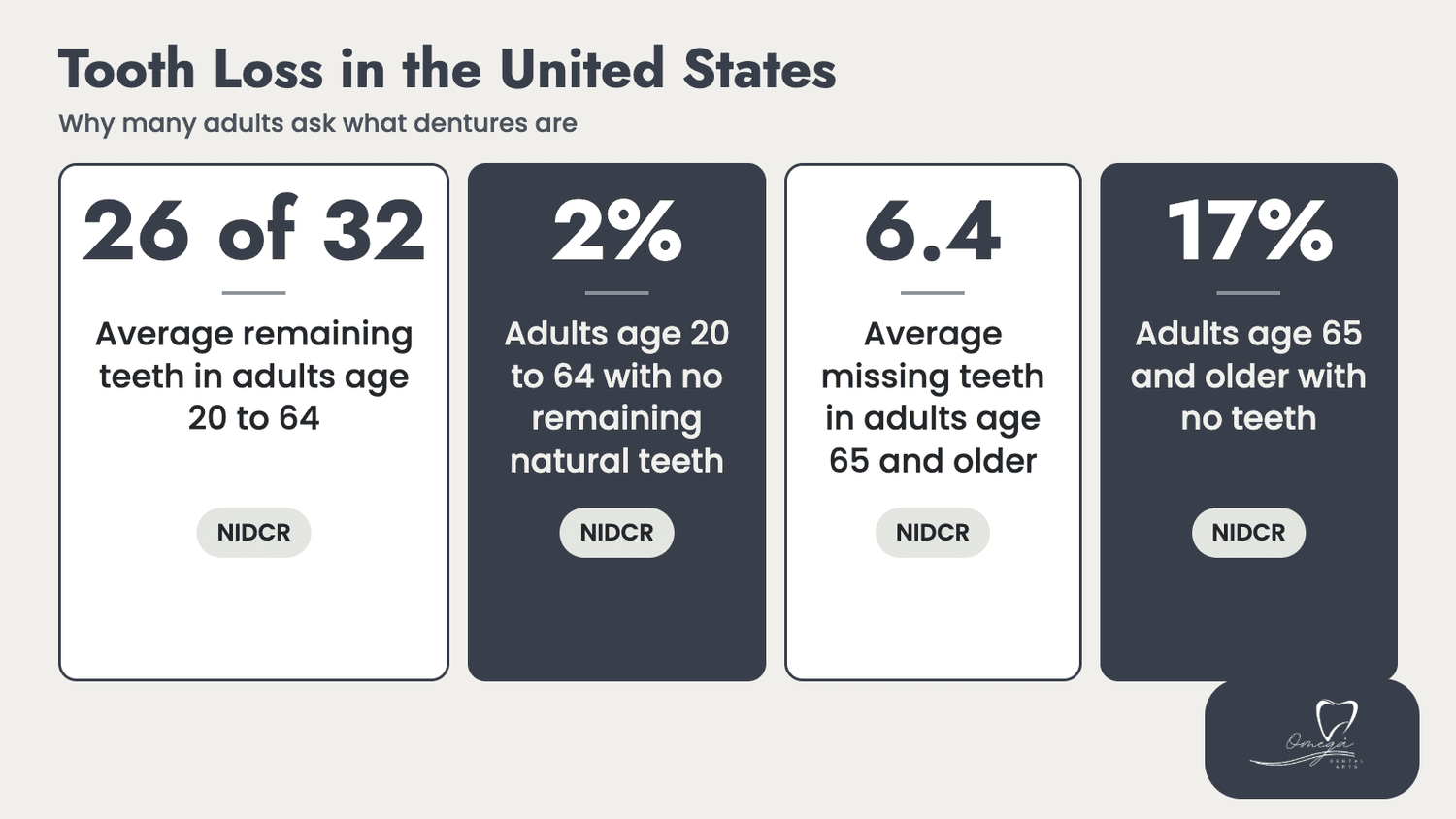
These numbers explain why materials and design matter, which leads to what dentures are made of.
What Are Dentures Made Of?
Dentures are made of acrylic, resin, nylon, metal or porcelain, according to Cleveland Clinic. A complete denture has artificial teeth set in a gum-colored base. The American College of Prosthodontists says a typical partial denture combines a metal framework, pink plastic and plastic or resin teeth.
Each material has a job. The base replaces gum tissue, and the artificial teeth replace the crowns of the lost teeth. The next section shows how these parts form the main types.
What Are the Main Types of Dentures?
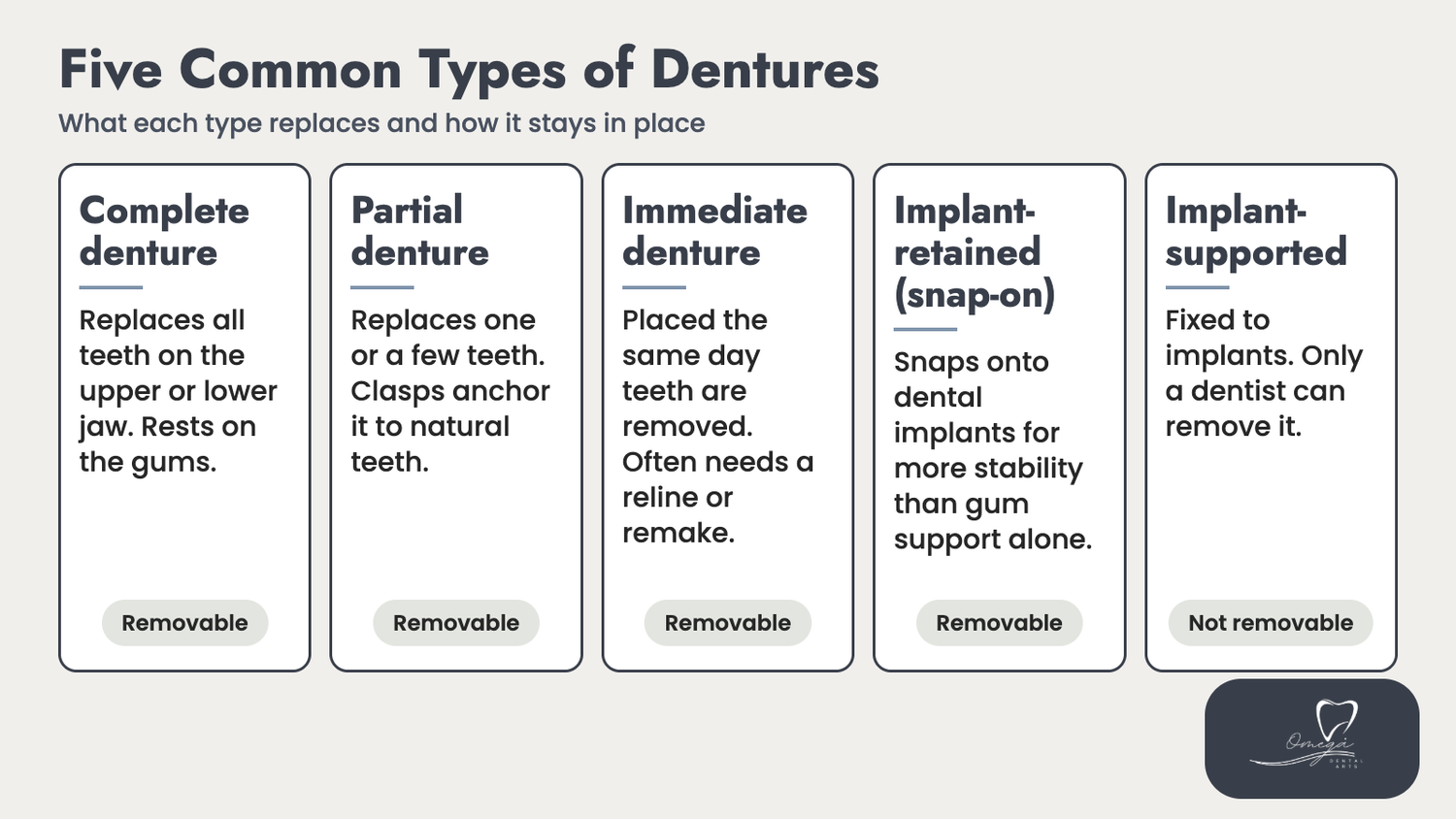
The main types of dentures are complete, partial, immediate, implant-retained and implant-supported, according to Cleveland Clinic and the ADA. The table below compares how each type replaces teeth and stays in place.
| Type | What it replaces | How it stays in place | Removable? |
|---|---|---|---|
| Complete | All teeth on one jaw | Rests on the gums, palate or jawbone ridge | Yes |
| Partial | One or a few teeth | Clasps anchor it to remaining teeth | Yes |
| Immediate | Teeth removed that day | Rests on the healing gums | Yes |
| Implant-retained | All teeth on one jaw | Snaps onto dental implants | Yes |
| Implant-supported | All teeth on one jaw | Fixed to dental implants | No, only a dentist removes it |
The graphic below summarizes the same five types, and each type has its own section.
What Are Full Dentures?
Full dentures replace every tooth on the upper jaw, the lower jaw or both, according to MedlinePlus. Cleveland Clinic also calls them complete dentures. An upper full denture relies on the palate for support, and a lower one relies on the jawbone ridge.
The ADA describes a conventional full denture as one placed after the remaining teeth are removed and the tissues have healed. That healing may take several months.
What Are Partial Dentures?
Partial dentures replace one or a few missing teeth, according to MedlinePlus. The American College of Prosthodontists says they use remaining teeth to anchor the appliance. The number and location of missing teeth affect comfort and stability.
Gaps at the back of the mouth have their own considerations, covered in a guide to partials for molars. Partial dentures stay removable, like complete dentures.
What Are Immediate Dentures?
Immediate dentures are removable dentures inserted on the same day the remaining teeth are removed, according to the ADA. The dentist takes measurements and makes models of the jaw at an earlier visit. The wearer is not without teeth during healing.
The ADA says the denture may need a reline or remake after the jaw heals. The NHS says immediate dentures often need adjusting or replacing up to a year later. Cleveland Clinic adds that some are temporary appliances, which searchers sometimes call temporary or healing dentures. Planning for tooth extractions happens before the denture is made.
What Are Snap On Dentures?
Snap on dentures are removable dentures that attach to dental implants, according to Cleveland Clinic. The clinic also calls them implant-retained or snap-in dentures. Implants are small threaded posts that surgeons place in the jawbone to replace tooth roots.
Cleveland Clinic reports that implant-retained dentures typically offer more stability than traditional dentures and do not need denture glue. The wearer still removes them at night to clean and soak them. Details on dental implants explain the surgical side.
What Are Permanent Dentures?
Permanent dentures are implant-supported dentures that do not come out, and only a dentist can remove them, according to Cleveland Clinic. The clinic also calls them hybrid dentures. They suit people who do not want a removable appliance.
Cleveland Clinic notes that a nonremovable denture needs more thorough daily cleaning, including flossing underneath it. The implant benefits article compares implants with other tooth replacement options.
What Is the Process for Dentures?
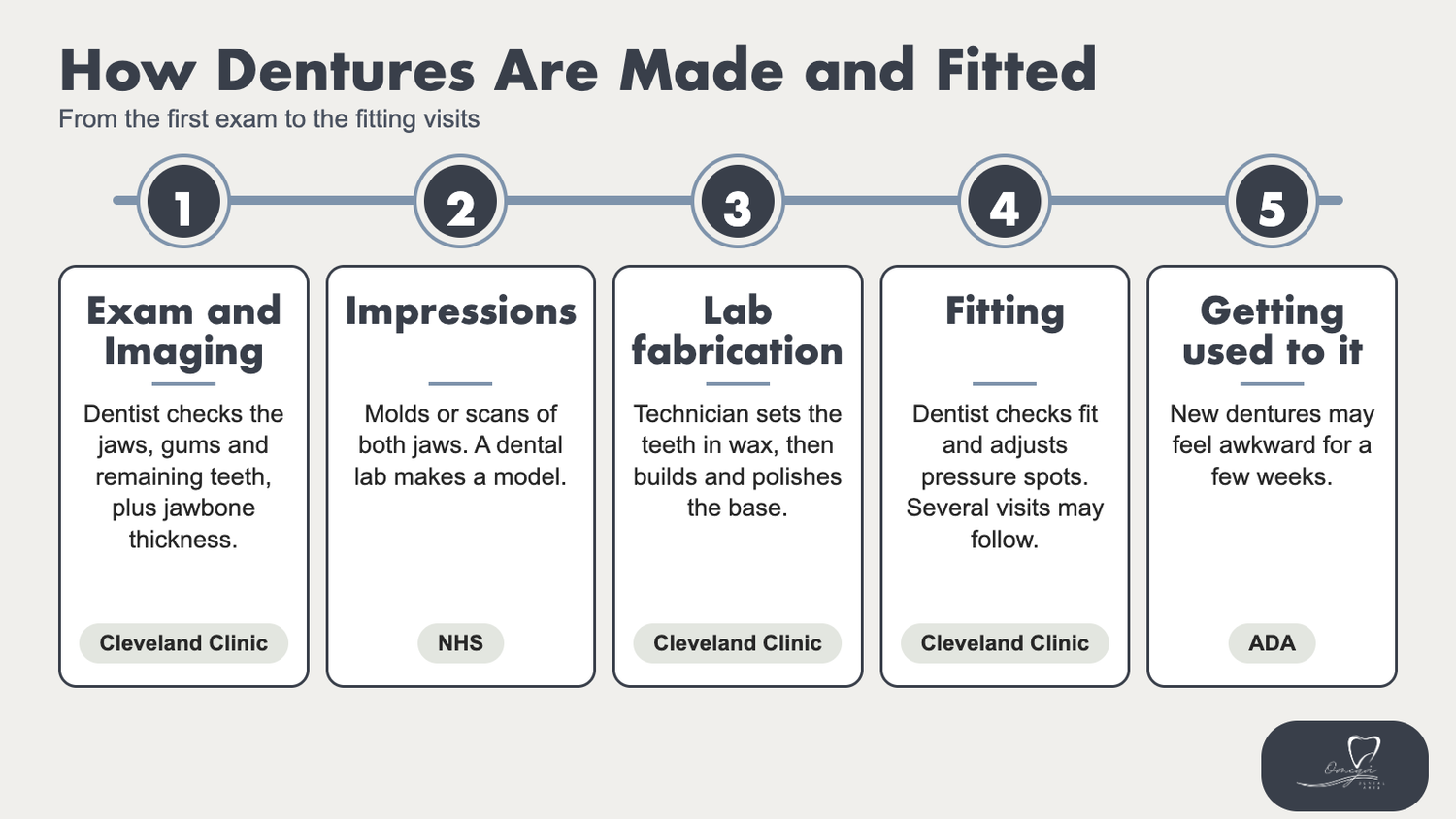
The process for dentures starts with an exam and imaging. The NHS says the denture usually takes a few weeks to make. The steps below follow Cleveland Clinic and NHS descriptions.
- The dentist examines the jaws, gums and remaining teeth and takes X-rays to check jawbone thickness.
- The dentist takes impressions or a scan of the upper and lower jaws.
- A dental technician builds a model, sets the teeth in wax, then makes and polishes the base.
- The dentist places the denture, checks the fit and adjusts any pressure spots.
- Follow-up visits fine-tune the fit, because the soft tissues need time to adjust.
The graphic below shows the same sequence from the first exam to getting used to the denture.
Cleveland Clinic says it usually takes several office visits to reach the desired fit. A denture appointment covers the exam, the options and the next steps.
What Is It Like to Have Dentures?
Having dentures feels awkward for a few weeks, according to the ADA. Cheek and tongue muscles need that time to learn to hold them in place. The ADA says minor irritation, soreness and extra saliva are not unusual at first. These effects should fade as the mouth adjusts.
MedlinePlus says dentures may make it harder to feel hot foods and liquids. MedlinePlus also says wearers may not notice biting on a bone. The NHS suggests practicing taking them in and out and eating softer foods. Cleveland Clinic says adjusting can take weeks or sometimes months.
Sudden pain, swelling or a broken denture should prompt a call to the dentist, and our emergency services cover urgent visits. MedlinePlus advises letting the dentist handle every adjustment.
What Is a Reline for Dentures?
A reline for dentures means the dentist adds material to the denture for a better fit, according to Cleveland Clinic. The denture itself stays in use. The NHS says dentures may loosen as the gums and jawbone shrink or change shape.
MedlinePlus says the mouth changes over time, so dentures may need adjusting or replacing. Regular dental exams let the dentist check whether the denture still fits. The ADA says a denture that stops fitting well should be checked by the dentist.
How Do You Care for Dentures?
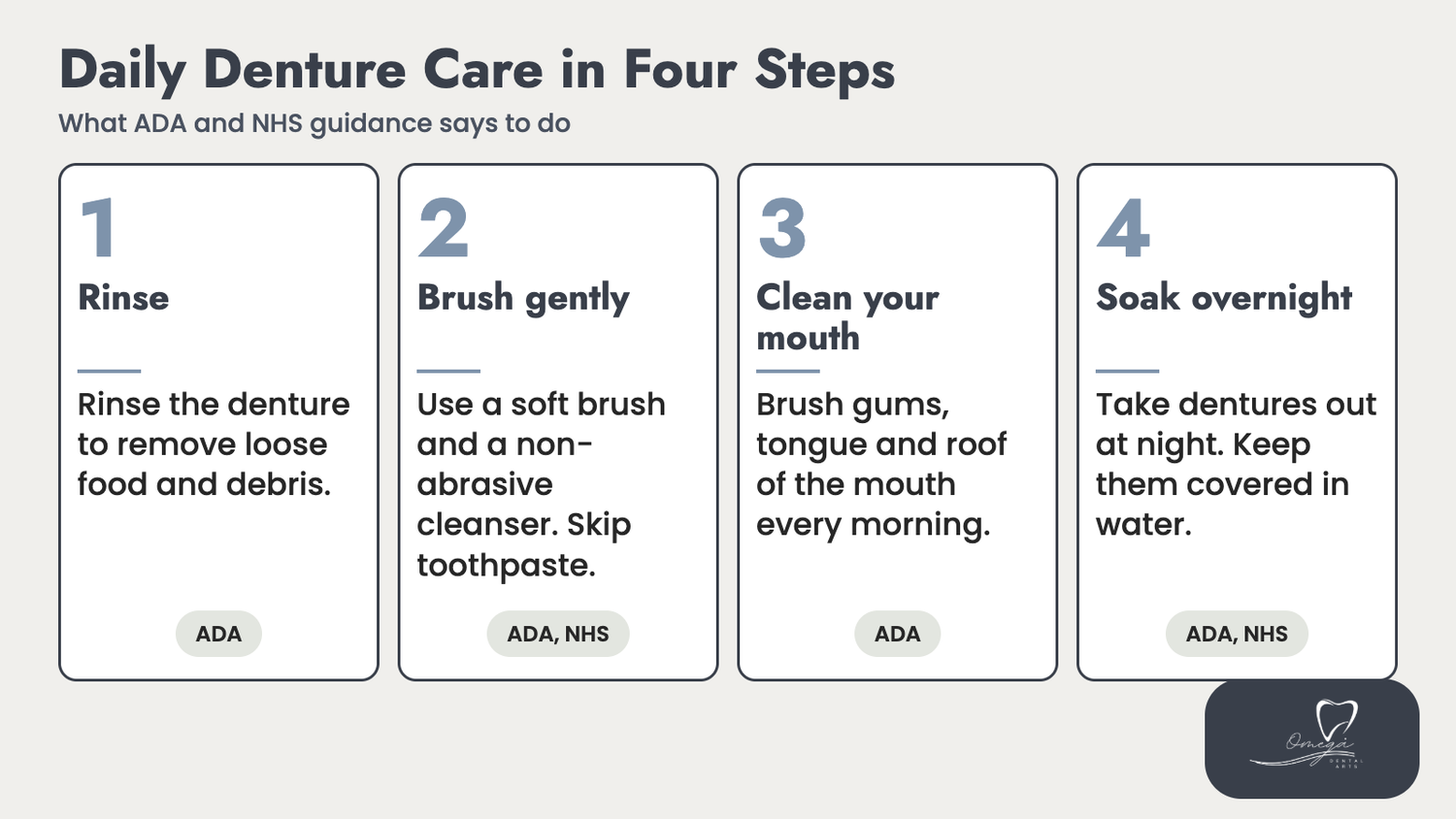
You care for dentures by rinsing, brushing gently, cleaning the mouth and soaking overnight, according to the ADA and NHS. Follow these steps each day.
- Rinse the denture to remove loose food and debris.
- Brush all surfaces gently with a soft brush and a non-abrasive cleanser, and skip toothpaste.
- Brush the gums, tongue and roof of the mouth every morning.
- Remove the denture at night and keep it covered in water.
The graphic below lists the same four steps with their sources.
The NHS says toothpaste could damage dentures. The ADA says covering them in water keeps them from warping.
What Are the Best Dentures to Get?
The best dentures to get depend on how many teeth are missing, according to Cleveland Clinic. Jawbone volume and a removable or fixed preference also matter. No single type suits every mouth. The dentist weighs the factors below.
- How many teeth are missing
- How long the teeth have been missing
- Whether a removable or nonremovable appliance is preferred
- The density and volume of the jawbone
- The relationship between the upper and lower jaws
- Personal preferences
Cleveland Clinic lists these six factors for choosing a type. An exam with X-rays shows which options fit the jaw.
What Are the Alternatives to Dentures?
The alternatives to dentures are dental bridges and dental implants, according to the NHS and Cleveland Clinic. The NHS says bridges are fixed to other teeth and cannot be removed. Implants are fixed to the jawbone to replace tooth roots.
The NHS adds that implants can support crowns or some types of dentures.
A dental bridge and its parts are explained in a separate article. A bridge replaces missing teeth without a removable appliance, according to the NHS description of bridges as fixed to other teeth. Implants work differently, because the posts replace the tooth roots in the jawbone.
The fixed options appear on the crowns and bridges service page. The dentist reviews the jawbone and the remaining teeth during the exam before recommending an option for the patient.
Readers who want more depth can read a comparison of implants or dentures and the pros and cons of each option.
What Else Should You Know About Dentures?
Can You Sleep With Dentures In?
No, you should not sleep with dentures in unless your dentist recommends it, according to the NHS. The NHS says trapped food raises the risk of gum infections and tooth decay. The NHS also notes a choking risk during sleep.
A Journal of Dental Research cohort followed 453 denture wearers aged 85 and older for three years. Of those wearers, 40.8% wore dentures during sleep. Overnight wear was linked to an approximately 2.3-fold higher pneumonia risk. The study is observational, so it shows an association only.
What Are Dentures Like for Eating and Speaking?
Dentures feel different for eating and speaking at first, according to MedlinePlus. The ADA says the muscles of the cheek and tongue learn to keep them in place. The NHS suggests eating softer foods until the regular diet feels comfortable.
How Long Do Dentures Last?
Dentures last an average of seven to 10 years, according to Cleveland Clinic. Most wearers need replacement dentures at that point. The NHS says dentures can last for years with proper care and regular dental visits.
Do Dentures Need Adhesive?
Dentures may need adhesive when they move too much in the mouth, according to MedlinePlus. The Food and Drug Administration (FDA) says some adhesives contain zinc. Excess zinc in the body can cause nerve damage over an extended period.
The ADA advises reading the label and using adhesives exactly as directed. The ADA recommends products with the ADA Seal of Acceptance.
What Is Denture Stomatitis?
Denture stomatitis is an inflammation of the tissue under a removable denture, linked to biofilm on the denture. A 2024 systematic review in the Journal of Fungi reports a worldwide prevalence of 20% to 67% among wearers. The review links it to ill-fitting dentures or Candida fungus.
The NHS says poor cleaning and missed adjustments can lead to a sore mouth and infections. Daily cleaning and a good fit lower that risk.
How Does Omega Dental Arts Help With Dentures?
Omega Dental Arts helps with dentures through exams, planning, fitting and follow-up visits at our Cherry Hill office. Our team explains each type and what to expect. The doctors then plan the option that fits the mouth.
Patients who want to review options can schedule a denture consultation. Questions about fit, care or a loose denture are welcome at any visit.
Anyone with questions about fit, care or a loose denture can raise them at any visit. The doctors answer questions about each denture type during the exam. Appointments are available for new and returning patients.
Patients can learn about the practice at Omega Dental and the doctors behind it.